



- 2007/171 pages
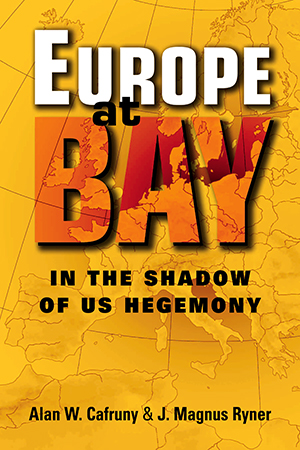
Europe at Bay:
In the Shadow of US Hegemony
Hardcover: $48.00
ISBN: 978-1-58826-513-5
Paperback: $22.00
ISBN: 978-1-58826-537-1
Europe at Bay was completed just before the onset of the financial crisis, and two years before the Eurozone crisis emerged. In contrast to mainstream European integration scholarship that celebrated the Euro at the time, Alan Cafruny and Magnus Ryner issued warnings that have since been validated by events.
Focusing on the underlying social forces and power relations in Europe, Cafruny and Ryner argue that the Maastricht Treaty and subsequent EMU could not bring about the "ever closer union" anticipated by so many. Current events are the predictable result of a two-decade process of neoliberal integration that has culminated in savage austerity programs, right-wing populism, growing national rivalries, and deepening subordination to the United States.
A salvo in the debate about the crisis of the EU, Europe at Bay offers an accessible yet provocative contribution to a deeper and more comprehensive understanding of Europe's contemporary predicament.
Focusing on the underlying social forces and power relations in Europe, Cafruny and Ryner argue that the Maastricht Treaty and subsequent EMU could not bring about the "ever closer union" anticipated by so many. Current events are the predictable result of a two-decade process of neoliberal integration that has culminated in savage austerity programs, right-wing populism, growing national rivalries, and deepening subordination to the United States.
A salvo in the debate about the crisis of the EU, Europe at Bay offers an accessible yet provocative contribution to a deeper and more comprehensive understanding of Europe's contemporary predicament.



