





Sort by: Author | Title | Publication Year
BOOKS
Prison Homicide: Killing and Dying in Prison TodayJoshua S. Long The media frequently hype the notion that US prisons, overcrowded and understaffed, are deadly places. Are they correct? How many people actually die in prison, and from what causes? Who are the victims? The perpetrators? How reliable are the available data? Joshua Long addresses these questions in his rich, in-depth study of killing and dying in carceral settings. Incorporating numerous case More > |  |
Narcostates: Civil War, Crime, and the War on Drugs in Mexico and Central AmericaWilliam L. Marcy How did Mexico and Central America become a lawless corridor for conveying narcotics into the United States? How did the drug cartels rise to power, succeeding in institutionalizing the narco-industry? Why have the police and military failed to rein the cartels in? What have been the consequences of the US-led "war on drugs?" William Marcy's Narcostates provides answers to these More > |  |
Making Police Reform Matter in Latin AmericaMary Fran T. Malone, Lucía Dammert, and Orlando J. Pérez Police forces in Latin America historically have been regarded as hopelessly corrupt, inefficient, and even abusive. More recently, however, there have been clear signs that police reforms have gained traction in the region—with some notable exceptions. The authors of this book explore the scope of the reforms that have been enacted in a diverse group of countries, their impact on More > |  |
Policing and Politics in Latin America: When Law Enforcement Breaks the LawDiego Esparza Though police are supposed to serve and protect, they all too often rob and abuse. Why? And what can be done about it? That is the central puzzle addressed in this book. Drawing on the disparate cases of Chile, Colombia, and Mexico, Diego Esparza analyzes why some countries' police forces are more corrupt than others and considers what policy initiatives can turn an abusive police force More > |  |
Social Problems and Social Control in Criminal JusticeStacy Burns and Mark Peyrot Today's headlines are rife with reports of hate crimes, domestic terrorism, drug abuse, police malfeasance, and many other profound social problems. Equally, there are discussions, often contentious, about how best to respond to the issues raised. Stacy Burns and Mark Peyrot explore government efforts to address social problems in the context of the criminal justice system. More > |  |
Copycat Crime and Copycat CriminalsRay Surette How prevalent is copycat crime? Can we accurately identify it? What role does the media play in encouraging it? These are among the questions that Ray Surette addresses in his comprehensive study of the nature of copycat crime, both past and present, and the forces that drive it. Surette goes beyond prevalent myths and anecdotal evidence to rigorously define copycat crime and to place it in More > |  |
Cyber Intelligence: Actors, Policies, and PracticesConstance S. Uthoff US national security compromised by Wikileaks. Towns held hostage by ransomware. Corporate websites hacked. Cyber espionage and cybercrimes are increasing in both frequency and sophistication—requiring the collection of actionable intelligence in order to combat them. Constance Uthoff provides a comprehensive overview of cyber intelligence, explaining what it is, why it is needed, who is More > |  |
Illicit Money: Financing Terrorism in the Twenty-First CenturyJessica Davis Terrorists need money ... to recruit and train people, to buy weapons, to maintain safe houses, to carry out attacks. Which raises the question: how do they procure and protect funds to finance their operations? In Illicit Money, Jessica Davis thoroughly answers that question. Davis explores the full spectrum of terrorist finance, drawing on extensive case studies to dissect how individuals, More > |  |
Intelligence for Homeland Security: An IntroductionJeffrey Douglas Dailey and James Robert Phelps Since the September 11 terrorist attacks—considered one of the worst intelligence failures in US history—the many agencies that constitute the homeland security enterprise have aggressively developed their intelligence capabilities and activities. Jeffrey Dailey and James Phelps provide a comprehensive introduction to the nature of intelligence, its structures, roles, and missions, in More > |  |
Securing the Private Sector: Protecting US Industry in Pursuit of National SecurityDarren E. Tromblay As a provider of vital infrastructure and technology, the private sector has become an essential contributor to US national security—and the target of hackers and terrorists. Darren Tromblay traces the evolution of an often fraught public-private partnership to explore how the complex web of intelligence agencies has struggled to protect critical economic and industrial interests. More > |  |
Nixon’s FBI: Hoover, Watergate, and a Bureau in CrisisMelissa Graves Polly Corrigan Book Prize Finalist! In 1974, Richard Nixon resigned in disgrace. In 2020, Donald Trump was impeached. Both were investigated by the FBI, an agency under their control. How is it that the bureau is responsible for investigating the president it serves? How can it do so effectively? Nixon's FBI confronts these questions. Melissa Graves draws on groundbreaking research and More > |  |
Fear, Justice, and Modern True CrimeDawn K. Cecil For centuries, people have been drawn to true stories of crime and the justice system. But what began primarily as a literary genre focusing on murder has evolved. From docuseries and podcasts to Facebook groups and events such as CrimeCon, modern true crime has become diverse, complex, and interactive. In Fear, Justice, and Modern True Crime, Dawn Cecil examines the genre to uncover the messages More > |  |
Shots Fired: Gun Violence in the United StatesHoward Rahtz Mass killings. Gang violence. Street crimes. Suicides. Accidental shootings. The United States is enduring a literal epidemic of gun violence. Howard Rahtz, drawing on decades of experience as a police officer all too familiar with the horrors that guns can cause, delves deeply into the nature and impact of this epidemic. Rahtz explores each element of the triangle of ability, desire, and More > |  |
The Politics of Restorative Justice: A Critical Introduction, 2nd editionAndrew Woolford and Amanda Nelund In this new, significantly revised edition of an acclaimed text, Andrew Woolford and Amanda Nelund reconsider restorative justice and its politics both globally and locally. The authors clarify key theoretical issues while offering fresh perspectives and provocative questions. Observing that "transformative justice is an always unfinished project," they ask how the approach might be More > |  |
After Homicide: Victims’ Families in the Criminal Justice SystemSarah Goodrum In After Homicide, Sarah Goodrum examines the experiences of the families of murder victims as they encounter detectives, prosecutors, counselors, and others in the criminal justice system. Goodrum traces each step of a murder investigation and trial, drawing on personal accounts and other primary sources. Based on extensive field research, her book is a uniquely comprehensive look at how the More > |  |
Gender Identity, Sexual Orientation, and Sexual Assault: Challenging the MythsCorina Schulze, Sarah Koon-Magnin, and Valerie Bryan Winner of the American Society of Criminology’s Division on Women & Crime Book Award! The underlying argument of this groundbreaking study is this: Sexual orientation and gender identity influence how sexual assault is experienced, how it is perceived, and ultimately, how victims (and perpetrators) are treated by the criminal justice system. Focusing much of their work on the queer More > |  |
Depolicing: When Police Officers DisengageWillard M. Oliver Depolicing—the withdrawal from proactive law enforcement by officers on the line—has become an increasing concern within both police departments and the communities that they serve. Willard Oliver, a former policeman himself, draws on extensive interviews with officers in a variety of jurisdictions to explore how prevalent depolicing has become, why officers engage in it, and what can More > |  |
Drug Courts and the Criminal Justice SystemDeborah Koetzle and Shelley Johnson Listwan, editors Drug courts—a rare success story in the criminal justice system—are generally credited with reducing recidivism and providing a lower-cost alternative to incarceration. They have also spawned the development of other specialty courts. The authors of Drug Courts and the Criminal Justice System provide a comprehensive analysis of just how drug courts work, systematically examining the More > |  |
When Police Use Force: Context, Methods, OutcomesCraig Boylstein New technology has offered the public the opportunity to witness police use of force far more frequently than in the past—and has brought into sharp focus a number of big questions. Where does police power to use force come from? How have the federal courts ruled on the subject? What sort of guidelines have police departments given their officers, and are they appropriate guidelines? More > |  |
Gender, Crime, and Justice: Exploring the DynamicsAndrew Wilczak Exactly what role does gender play in crime, and in the criminal justice system? Addressing this two-part question from the perspective of the offender, the victim, the community, and the overall justice system, Andrew Wilczak provides an accessible introduction to the full range of issues involved. Notably, this comprehensive text: • features an inclusive focus on both men and More > |  |
Roots of African American Violence: Ethnocentrism, Cultural Diversity, and RacismDarnell F. Hawkins, Jerome B. McKean, Norman A. White, and Christine Martin What explains the well-documented racial disparities in rates of homicide and other acts of criminal violence in the United States? Critically confronting the conventional narratives that purport to answer this question, the authors of Roots of African American Violence offer an alternative framework—one that acknowledges the often hidden cultural diversity and within-race ethnocentrism More > |  |
Race, Riots, and the PoliceHoward Rahtz Reflected almost daily in headlines, the enormous rift between the police and the communities they serve—especially African American communities—remains one of the major challenges facing the United States. And race-related riots continue to be a violent manifestation of that rift. Can this dismal state of affairs be changed? Can the distrust between black citizens and the police ever More > |  |
Race and the Death Penalty: The Legacy of "McCleskey v. Kemp"David P. Keys and R.J. Maratea, editors In what has been called the Dred Scott decision of our times, the US Supreme Court found in McCleskey v. Kemp that evidence of overwhelming racial disparities in the capital punishment process could not be admitted in individual capital cases—in effect institutionalizing a racially unequal system of criminal justice. Exploring the enduring legacy of this radical decision nearly three More > |  |
Wrongful Convictions of Women: When Innocence Isn’t EnoughMarvin D. Free, Jr., and Mitch Ruesink Choice Outstanding Academic Book! Marvin Free and Mitch Ruesink reveal the distinctive role that gender dynamics so often play in the miscarriage of justice. Examining more than 160 cases involving such charges as homicide, child abuse, and drug trafficking, the authors explore systemic failures in both policing and prosecution. They also highlight the More > |  |
Prison Life in Popular Culture: From "The Big House" to "Orange Is the New Black"Dawn K. Cecil Through the centuries, prisons were closed institutions, full of secrets and shrouded in mystery. But modern media culture has opened the gates. Dawn Cecil explores decades of popular culture—from Golden Age Hollywood films to YouTube videos, from newspapers to beer labels, hip-hop music, and children's books—to reveal how prison imagery shapes our understanding of who commits More > | 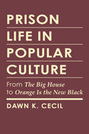 |
Crime, Justice, and Society: An Introduction to Criminology, 4th editionRonald J. Berger, Marvin D. Free, Jr., Melissa Deller, and Patrick K. O’Brien Now fully revised, Crime, Justice, and Society is designed not only to introduce students to the core issues of criminology, but also to help them think critically about often-sensationalized topics. Features of the 4th edition include: • A student-friendly, streamlined organization • Firsthand perspectives from offenders, victims, and criminal justice More > | 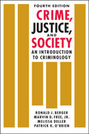 |
Muslims in US Prisons: People, Policy, PracticeNawal H. Ammar, editor How realistic are media portrayals of radical, "homegrown" Islamic terrorists filling US prisons? With prisons a fertile recruiting ground for Islam, what impact does the religion have on life behind bars? Muslims in US Prisons systematically explores the cultural, legal, political, and religious issues shaping the Muslim prison experience. More > | 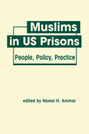 |
Race and Justice: Wrongful Convictions of African American MenMarvin D. Free, Jr. and Mitch Ruesink Choice Outstanding Academic Book! In this investigation of some 350 wrongful convictions of African American men, Marvin Free and Mitch Ruesink critically examine how issues of race undercut the larger goals of our criminal justice system. Free and Ruesink expand the focus of wrongful conviction studies to include not only homicide, but also sexual assault, drug dealing, and nonviolent More > | 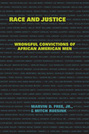 |
Disrupting Criminal Networks: Network Analysis in Crime PreventionGisela Bichler and Aili E. Malm, editors Tackling issues that range from disruptive street gangs to online illicit markets, the authors use the insights of network analysis—a sophisticated methodology for illuminating individual and group interconnections—to suggest practical, highly targeted ways to prevent criminal behavior. More > |  |
Confronting School Bullying: Kids, Culture, and the Making of a Social ProblemJeffrey W. Cohen and Robert A. Brooks Is bullying an innocent part of growing up ... or a serious problem requiring large-scale policy remedies? What is behind our rapidly changing perceptions of "acceptable" behavior? And when is the remedy worse than the problem? In their in-depth view of school bullying, Jeffrey Cohen and Robert Brooks navigate between empirical evidence and breathless media accounts to make sense More > |  |
Senior Citizens Behind Bars: Challenges for the Criminal Justice SystemJohn J. Kerbs and Jennifer M. Jolley, editors Within two decades—if not sooner—at least one in three prisoners in the US will be a "senior citizen." Our prisons, however, were designed for a much younger population. Senior Citizens Behind Bars critically explores the unique set of challenges that older prisoners pose for the criminal justice system. Examining the lack of fit between the needs of older inmates and the More > |  |
Religious Faith in Correctional ContextsKent R. Kerley Kent Kerley explores the issue of religion in prison, offering a rich portrait of religious practices and their impacts. Kerley shows how offenders of all stripes use faith to adapt and survive in difficult institutional settings. He sheds light on the complex processes of religious conversion, discusses the development of tools for "staying straight" in and after prison, and reveals More > |  |
Sex in Prison: Myths and RealitiesCatherine D. Marcum and Tammy L. Castle, editors Despite being deemed an illegal activity, participation in sexual activity behind prison walls is a frequent occurrence. Catherine Marcum and Tammy Castle provide a comprehensive study of all aspects of prison sex. Incorporating inmate, correctional officer, and policymaker perspectives—and debunking myths—the authors consider the full range of consensual and nonconsensual More > |  |
Girls and Violence: Tracing the Roots of Criminal BehaviorJudith A. Ryder Seeking to better understand the processes that push teenage girls to acts of criminal violence, Judith Ryder explores the relationship between disrupted emotional bonds and violent delinquency. Ryder draws on intimate interviews to show how teenage girls navigate experiences of abuse, emotional loss, and parental abandonment, revealing how their violent acts become a means of connecting with More > |  |
Meth Mania: A History of MethamphetamineNicholas L. Parsons Ice. Methedrine. Crank. Crystal. Whatever its guise, the social and political contexts of methamphetamine share a certain uniqueness. Nicholas Parsons chronicles the history and mythology of methamphetamine in the United States from the 1940s—when it was hailed as a wonder drug—to the present. In an intriguing analysis, he also makes an important contribution to our understanding of More > |  |
Cashing In on Crime: The Drive to Privatize California State PrisonsKaryl Kicenski What explains the boom in private prisons—especially since the record of privatization for rehabilitating prisoners and saving taxpayer dollars is, at best, mixed? Karyl Kicenski examines the privatization of California state prisons to illuminate the forces that shape and distort our criminal justice policies. Tracing the growth of private prisons from 1980 to the current day, Kicenski More > |  |
Battered Women Doing Time: Injustice in the Criminal Justice SystemRachel Zimmer Schneider When is killing an abusive partner an act of murder, and when is it self-defense? How does our criminal justice system deal with battered women who kill, and to what effect? Rachel Schneider traces the lives of women who sought clemency after being imprisoned for killing their abusers, drawing on a series of intimate interviews to explore the circumstances leading up to the killings, the More > |  |
Policing and Prosecuting Sexual Assault: Inside the Criminal Justice SystemCassia Spohn and Katharine Tellis Cassia Spohn and Katharine Tellis assess the criminal justice system's response to sexual assault, exploring the complex dynamics that shape the actions of police and prosecutors. The authors draw on unparalleled access to Los Angeles detectives, prosecutors, and case files to make sense of the factors that affect the outcomes of sexual assault claims. Following cases from victim report, to More > |  |
Responding to School Violence: Confronting the Columbine EffectGlenn W. Muschert, Stuart Henry, Nicole L. Bracy, and Anthony A. Peguero, editors Why do so many school antiviolence programs backfire? And why do policymakers keep making the same mistakes? The authors of Responding to School Violence examine the pervasive rise of school security measures since the Columbine shootings, highlighting the unintended consequences of policymaking too often shaped by fear and sensationalism. Probing an array of now ubiquitous tactics and More > |  |
Offender Reentry: Beyond Crime and PunishmentElaine Gunnison and Jacqueline B. Helfgott In this comprehensive exploration of the core issues surrounding offender reentry, Elaine Gunnison and Jacqueline Helfgott highlight the constant tension between policies meant to ensure smooth reintegration and the social forces—especially the stigma of a criminal record—that can prevent it from happening. Gunnison and Helfgott focus on the factors that enhance reentry success as More > |  |
The Promise of Restorative Justice: New Approaches for Criminal Justice and BeyondJohn P. J. Dussich and Jill Schellenberg, editors with a foreword by Mark S. Umbreit The increasing popularity of restorative justice has prompted new and varying applications of its core principles. The authors of The Promise of Restorative Justice highlight the ways that these new ideas now spark innovations both throughout the criminal justice system and in arenas as diverse as business, education, athletics, and the aftermath of ethnic conflict. They offer fresh More > |  |
Linking Disorders to Delinquency: Treating High-Risk Youth in the Juvenile Justice SystemChristopher A. Mallett Christopher Mallett explores developmental pathways to juvenile delinquency, disentangling key risk factors for offending—and not least, showing how contact with the justice system may only compound the problem. Tracing a child's life from the earliest years through adolescence, Mallett investigates the processes by which mental health disorders, More > |  |
Sex Slaves and Serfs: The Dynamics of Human Trafficking in a Small Florida TownErin C. Heil Erin Heil explores the global problem of human trafficking in the context of a small Florida town—one typical of the many rural communities that confront modern day slavery in their own backyards. Drawing on two years of interviews and observation, Heil lays out the dynamics that allow both agricultural and sexual forced labor to flourish. She also highlights community antitrafficking More > |  |
Prisoner Reentry at Work: Adding Business to the MixMelvin Delgado Convicted offenders need jobs when they leave prison—but few people want to hire them. Spotlighting this thorny issue, Melvin Delgado explores the potential role of business enterprises in providing work to former prisoners and helping them to reconnect with their home communities. Delgado documents the unconventional approaches of nonprofit businesses that deliberately and exclusively More > |  |
Design Against Crime: Crime Proofing Everyday ProductsPaul Ekblom, editor From bicycle stands configured to prevent theft to pharmaceutical packaging that thwarts counterfeiters, the authors fuse crime science and design practice to point the way forward for a new generation of crime-proofed objects used in everyday contexts. More > |  |
Gay and Lesbian Cops: Diversity and Effective PolicingRoddrick A. Colvin Roddrick Colvin assesses the impact of lesbian and gay police officers on law enforcement in the US and the UK, as well as the policies that enable a diverse work environment. Colvin tracks the evolution of police agencies toward being more "gay friendly" both as employers and as service providers. He also provides insights into the day-to-day barriers and opportunities that lesbian More > |  |
Guns, Violence, and Criminal Behavior: The Offender’s PerspectiveMark Pogrebin, Paul B. Stretesky, and N. Prabha Unnithan How are guns used and viewed by criminals? Where do criminals obtain guns? And how do laws make firearms more or less accessible? Confronting these contentious questions, Guns, Violence, and Criminal Behavior offers a comprehensive exploration of the social processes surrounding illegal firearm use and criminal behavior. The authors draw on in-depth interviews with felons convicted of More > |  |
Judging Victims: Why We Stigmatize Survivors, and How They Reclaim RespectJennifer L. Dunn Choice Outstanding Academic Book! "Why didn't she resist?" "Why is he telling us only now?" "Why can't she move on?" Unpacking the questions that cast victims as deviants, Jennifer Dunn critically examines why we stigmatize survivors of rape, battering, incest, and clergy abuse—and how they reclaim their identities. Dunn explores the shifting More > |  |
Dorm Room Dealers: Drugs and the Privileges of Race and ClassA. Rafik Mohamed and Erik D. Fritsvold Why do affluent, upwardly mobile college students—who have everything to lose and little to gain—choose to sell drugs? Why do law enforcement officers largely overlook drug dealing on college campuses? With rich, lively details, A. Rafik Mohamed and Erik Fritsvold deliver unprecedented insight into the world of college drug dealers—and offer an important corrective to the More > |  |
Enforcing the Convict Code: Violence and Prison CultureRebecca Trammell Is it possible that a prison's gangs, racial tensions, and underground economy may actually serve to make it a less dangerous place? In this examination of violence behind bars, Rebecca Trammell illuminates the social code that prisoners enforce—in defiance of official rules and regulations—to maintain a predictable order. Trammell also compares the experiences of male and More > |  |
Crime and Criminality: Causes and Consequences, 2nd editionRonald D. Hunter and Mark L. Dantzker This concise but thorough introductory textbook bridges the gap between theory and the real world of crime and criminal justice. In clear, accessible prose, the authors discuss the full gamut of issues and concepts typically covered on the introductory course syllabus. Building on the basics covered in the first edition, this revised and updated edition: • Uses More > |  |
Clergy Sexual Abuse Litigation: Survivors Seeking JusticeJennifer M. Balboni Why did victims of Catholic clergy sexual abuse wait so long to come forward, and what did their recourse to the courts finally achieve? Jennifer Balboni explores the experiences of clergy sex abuse survivors who sought justice through the court system, highlighting the promise and shortfalls of civil litigation in providing justice. Balboni draws on cases across the country such as the More > |  |
Outsourcing Justice: The Role of Nonprofit Caseworkers in Pretrial Release ProgramsUrsula Castellano Do pretrial release programs, initiated and now operated by a range of nonprofit organizations to redress the inequalities of the bail system, affect the administration of justice? Specifically, do they lessen the barriers to justice often faced by poor and minority defendants? Ursula Castellano's ethnographic study of four pretrial release programs reveals the often unintended consequences of More > |  |
Women Aging in Prison: A Neglected Population in the Correctional SystemRonald H. Aday and Jennifer J. Krabill Ronald Aday and Jennifer Krabill offer a complete picture of the experience of older women prisoners and the distinct challenges these women present for correctional institutions. The authors integrate their quantitative findings with the voices of individual inmates to explore essential concerns such as health, inmate and family relationships, prison adjustment, and end-of-life issues. They More > | 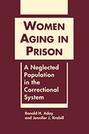 |
The Paradox of Youth ViolenceJ. William Spencer Winner of the Midwest Sociological Society Distinguished Book Award, 2013! Is a teenage violent offender a dangerous predator—or a vulnerable innocent that we should rescue from a life of crime? J. William Spencer probes our ambivalent response to youth violence to show how deeply entwined issues of crime, age, race, and class distort our understanding of an important social More > |  |
White-Collar Crime: The Abuse of Corporate and Government PowerRonald J. Berger When does cutting corners in pursuit of corporate profit become a crime? When should the misdeeds of government officials warrant a prison sentence? This lucid introduction to the notoriously complex problem of white-collar crime provides students with a set of tools for exploring the abuse of corporate and government power. This student-friendly text: ● More > | 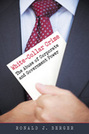 |
Crime, Punishment, and Restorative Justice: From the Margins to the MainstreamRoss London Is there a place for punishment in restorative justice? Can restorative justice be applied to a full range of offenses? Ross London answers both questions with an unequivocal yes. London proposes that restoration, and especially the restoration of trust, be viewed as the overarching goal of all criminal justice policies and practices. Within that context, he argues that punishment—far More > |  |
Preventing Crowd ViolenceTamara D. Madensen and Johannes Knutsson, editors From jubilant sports fans celebrating a victory to angry political protestors, crowds create volatile situations that can all too often result in violence or property destruction. Preventing Crowd Violence offers a lucid examination of crowd behavior and of law enforcement tactics designed to deescalate tensions and promote cooperative interactions. More > |  |
Animal Programs in Prison: A Comprehensive AssessmentGennifer Furst Gennifer Furst provides the first comprehensive look at prison-based animal programs, an innovative approach to rehabilitation that draws on the benefits of human-animal interactions. Analyzing a national survey of these programs and also presenting in-depth case studies, Furst pinpoints the mechanisms that transform prisoners’ lives and reduce the chances of recidivism. The result More > |  |
Wrongful Death Sentences: Rethinking Justice in Capital CasesCathleen Burnett What acts truly deserve the death penalty? And how equitably do we apply this ultimate punishment? Cathleen Burnett explores wrongful capital sentencing to offer a sober yet searing critique of the criminal justice procedures and legal criteria involved. Highlighting problems such as the elicitation of false confessions, prosecutors who choose to ignore mitigating factors, and Supreme Court More > |  |
Evaluating Crime Reduction InitiativesJohannes Knutsson and Nick Tilley, editors How should evaluations of problem-oriented policing and situational crime prevention projects be conducted? Although evaluation has been a driving force in the recent worldwide growth of the two approaches, both of which focus on reducing opportunities for committing crimes, there has been a growing consensus among researchers that evaluations of many such crime prevention programs have been More > |  |
The Police in War: Fighting Insurgency, Terrorism, and Violent CrimeDavid H. Bayley and Robert M. Perito Frustrated efforts in both Iraq and Afghanistan give urgency to the question of how to craft effective, humane, and legitimate security institutions in conflict-ridden states—and whether legitimate policing can in fact be developed in the midst of insurgency and terrorism. David H. Bayley and Robert M. Perito confront these questions head on. Against the backdrop of failed US attempts to More > |  |
Juvenile Delinquency and Justice: Sociological PerspectivesRonald J. Berger and Paul D. Gregory, editors This new anthology offers a comprehensive overview of the essential topics in juvenile delinquency and justice. The selections encompass both landmark scholarship and cutting-edge research to expose students to a wide range of theoretical and methodological approaches. Thematic section introductions and editors’ notes provide context and draw attention to how a sociological perspective can More > |  |
Crime and the Global Political EconomyH. Richard Friman, editor Crime has gone global. Conventional explanations point to ways in which criminals have exploited technological innovations, deregulation, and free markets to triumph over state sovereignty. Crime and the Global Political Economy reveals a more complex reality. Taking as a point of departure the fact that state and societal actors are challenged by—and complicit in—the expansion of More > |  |
The High Life: Club Kids, Harm and Drug PolicyDina Perrone Why do well-educated young professionals engage in frequent and intensive drug use at dance clubs? And how do they protect themselves from drug-related illnesses and involvement with the criminal justice system? Dina Perrone's vivid ethnographic research on New York City "club kids" illuminates their distinctive subculture, describes their patterns of drug use, and explores the More > |  |
Reducing Terrorism Through Situational Crime PreventionJosh Freilich and Graeme Newman, editors The authors explore the application of situational crime prevention (SCP) techniques to the battle against terrorism. "It is little wonder," the editors assert in their introduction, "that SCP should emerge as a significant approach to solving the problem of terrorism. It is an approach that is so practical and so focused on protecting individuals, locations and groups from More > |  |
Sentencing Guidelines: Lessons from PennsylvaniaJohn H. Kramer and Jeffrey T. Ulmer Sentencing guidelines, adopted by many states in recent decades, are intended to eliminate the impact of bias based on factors ranging from a criminal’s ethnicity or gender to the county in which he or she was convicted. But have these guidelines achieved their goal of “fair punishment”? And how do the concerns of local courts shape sentencing under guidelines? In this More > |  |
Problem-Oriented Policing and Crime Prevention, 2nd editionAnthony A. Braga Instead of merely reacting to crimes once they've been committed, can police agencies learn how to prevent offenses from occurring? Anthony Braga’s comprehensive analysis demonstrates clearly how the emerging problem-oriented policing approach is proving effective in preventing a wide range of criminal activities. Problem-Oriented Policing and Crime Prevention is the only book More > |  |
Racial Divide: Racial and Ethnic Bias in the Criminal Justice SystemMichael J. Lynch, E. Britt Patterson, and Kristina K. Childs, editors How is the racial divide in US society reflected in the practices of the nation's criminal justice system? Documenting a persistent pattern of institutionalized racial and ethnic discrimination at every stage of the system, the authors focus on issues of policing, the adult and juvenile court systems, prisons, the application of the death penalty, the science of forensics, and the incidence of More > |  |
Perspectives on Identity TheftMegan M. McNally and Graeme R. Newman, editors Presenting new research on the crime of identity theft, the authors of this volume focus on situational measures to protect sensitive personal information. More > |  |
The New Technology of Crime, Law and Social ControlJames M. Byrne and Donald J. Rebovich, editors Exploring the impact of new technologies on crime and its prevention, and on the criminal justice system, the authors address five critical issues: How will new technological innovations affect both crime prevention and crime control policies toward offenders and victims? Will criminal justice personnel be replaced by new hardware/software? Will technology lead to increased privatization of More > |  |
A Primer in the Politics of Criminal Justice, 2nd editionNancy E. Marion How does politics shape US government policies to control crime? How does the criminal justice system affect the activities of political actors? This lively text provides an overview of crime as a political issue and the impact of politics on US policymaking in the field of criminal justice. Recent policy responses to internet-related crimes are used as real-world examples of the political More > |  |
Imagination for Crime Prevention: Essays in Honour of Ken PeaseGraham Farrell, Kate J. Bowers, Shane D. Johnson, and Mike Townsley Drawing inspiration from the work of noted criminologist Ken Pease, the authors explore the role that imagination—matched with scientific rigor—can play in developing crime prevention strategies. More > |  |
How Drug Dealers Settle Disputes: Violent and Nonviolent OutcomesAngela P. Taylor In this compelling ethnographic study, Angela Taylor delivers an inside view of how drug dealers settle disputes—yielding rich insight into situational theories of violence and the nature of the drug trade. Taylor draws on firsthand accounts to address the following questions: What are the characteristics of drug-business disputes? How do such disputes move from initial confrontation to More > | |
When Killing Is a CrimeTony Waters Taking another person's life is the crime for which every society reserves the strongest of punishments. But why (and when) is the act of killing sometimes defined as murder—as inexcusable—and other times considered a justifiable, or even righteous, act? Grappling with this ambiguity, Tony Waters sheds light on the sociology of murder. This innovative text draws on More > |  |
Surveying Crime in the 21st Century: Commemorating the 25th Anniversary of the British Crime SurveyMike Hough and Mike Maxfield What can researchers glean from national crime surveys? And how must these research tools evolve to remain relevant? Addressing these questions, the authors highlight key findings of the British Crime Survey and the US National Crime Victimization Survey and outline innovations necessary for their continued usefulness. More > | |
Tabloid Justice: Criminal Justice in an Age of Media Frenzy, 2nd EditionRichard L. Fox, Robert W. Van Sickel, and Thomas L. Steiger This new edition of Tabloid Justice reveals that, although the media focus on high-profile criminal trials is thought by many to have diminished in the years since the September 11 terrorist attacks, the polarized, partisan coverage of these trials has in fact continued unabated. The authors investigate the profoundly negative impact of the media's coverage of the criminal justice More > |  |
Primer in Radical Criminology: Critical Perspectives on Crime, Power, and Identity, 4th editionMichael J. Lynch and Raymond Michalowski This acclaimed textbook insightfully frames the problem of crime in relation to class, race, gender, culture, and history. More > |  |
Situational Prevention of Child Sexual AbuseRichard Wortley and Stephen Smallbone What practical steps can reduce child abuse? The authors of this provocative work argue that child sex offending is strongly influenced by opportunities to offend, and that analyzing the environmental contexts of offending may offer new insights into preventing the behavior. More > | |
Delinquency and Juvenile Justice Systems in the Non-Western WorldPaul C. Friday and Xin Ren, editors Why has youth crime been rising in the developing countries, and how well have their juvenile justice systems responded to this trend? This anthology profiles delinquency rates and juvenile justice systems in chapters on China, India, Japan, Macao, Nigeria, Pakistan, the Philippines, Saudi Arabia, South Africa, Thailand and Turkey. Each nation's distinctive response to youth crime is described More > | |
Putting Theory to Work: Implementing Situational Prevention and Problem-Oriented PolicingJohannes Knutsson and Ronald V. Clarke, editors The authors provide both practical guidance and general principles for successfully implementing crime prevention projects. More > | |
Women Behind Bars: Gender and Race in US PrisonsVernetta D. Young and Rebecca Reviere Today's prisons are increasingly filled with poor, dark-skinned, single mothers locked up for low-level drug involvement—with serious ramifications for the corrections system. Women Behind Bars offers the first comprehensive exploration of the challenges faced by incarcerated women in the United States. Young and Reviere show conclusively that serving time in prisons designed by More > |  |
Restorative Justice: Healing the Foundations of Our Everyday Lives, 2nd editionDennis Sullivan and Larry Tifft What is restorative justice, and how should it be used to reform our society? Dennis Sullivan and Larry Tifft passionately expound a radical critique of the existing justice system and outline a needs-based restorative justice alternative. They also propose that restorative justice principles be extended far beyond the legal system, to families, schools, workplaces, neighborhoods and other More > |  |
Understanding Today’s Police, 4th editionMark L. Dantzker Clearly introducing the complexities of policing today, Mark Dantzker—a former police officer himself—outlines key professional duties in the context of the changing nature of the field. Dantzker explores the myths and realities of criminal investigation, the challenges of patrol, police misconduct, and the crucial use of officer discretion. He also discusses the importance of an More > |  |
Designing Out Crime from Products and SystemsRonald V. Clarke and Graeme R. Newman From tamper-proof seals to cell phones that prevent theft-of-service, it has been proven that modifying products can reduce or even eliminate specific categories of crime. The contributors to this volume argue that both the corporate sector and governments must develop research and development capacities in order to take more active roles in modifying even more criminogenic products. More > | |
Policing Illegal Drug Markets: Geographic Approaches to Crime ReductionGeorge Rengert, Jerry H. Ratcliffe, and Sanjoy Chakravorty A multipronged policing strategy to reduce drug trafficking in local communities is proposed in this new book by three Temple University researchers. The proposed strategy has been developed during a comprehensive study of illegal drug markets in a medium-sized East Coast city. According to the authors, the US War on Drugs has been largely ineffective. Evaluations have shown little positive More > | |
Public Policing in the 21st Century: Issues and Dilemmas in the U.S. and CanadaJames F. Hodgson and Catherine Orban, editors This reader analyzes how U.S. and Canadian police agencies are responding to today's unprecedented challenges, including terrorist threats, school shootings, demands for increased responsiveness to women and minorities, and the policing requirements of the information age. More > | |
Critical Issues in Restorative JusticeHoward Zehr and Barb Toews, editors In a mere quarter-century, restorative justice has grown from a few scattered experimental projects into a worldwide social movement and field of study. The contributors to this book critically examine restorative justice, identifying the main threats to its integrity and effectiveness. The ground that they cover ranges from victim, offender, and practitioner issues, to the role of the state, to More > |  |
Sexual Violence: Policies, Practices, and Challenges in the United States and CanadaJames F. Hodgson and Debra S. Kelley, editors Have recent US and Canadian reforms changed institutional responses to the crime of rape and the treatment of rape victims? Exploring this issue, the authors present multidisciplinary perspectives on the effectiveness of rape law reforms, debates on chemical castration, the policing of sexual violence, cyber rape, the role of sexual assault treatment programs, sexual assault among prisoners, the More > |  |
Adult Corrections: International Systems and PerspectivesJohn A. Winterdyk, editor In this text, prominent resident scholars present comprehensive overviews of the adult corrections systems of Belgium, Canada, Finland, Germany, India, Iran, Japan, Namibia, Romania and the US. These national profiles provide a rare comparative and international perspective on corrections trends, issues and problems. The national profiles are complemented by the editor's introduction and More > |  |
Understanding and Preventing Car TheftMichael G. Maxfield and Ronald V. Clarke, editors Thefts of and from autos are among the most commonly reported crimes, and they account for the highest losses among property crimes that target individuals (except for arson). But according to this new book, recent initiatives in the U.S., Europe and Australia have proven effective or are showing promise in preventing car theft. More > | |
Understanding Police Use of ForceHoward Rahtz Rahtz provides an even-handed and comprehensive discussion of the use of force in law enforcement. More > |  |
Good Cop-Bad Cop: Mass Media and the Cycle of Police ReformJarret S. Lovell Good Cop/Bad Cop offers the first extended review of the influence of the mass media on local and federal law enforcement in the US. Adopting an interdisciplinary approach and drawing on popular characterizations of law enforcement from movies, newspapers, television, and literature, Jarret Lovell reveals police reform is inextricably linked to the rise and technological development of the More > | |
Facing Violence: The Path of Restorative Justice and DialogueMark S. Umbreit, Betty Vos, Robert B. Coates, and Katherine A. Brown Can restorative justice be effective in cases involving the most serious violent crime? The authors of Facing Violence evaluate pioneering programs in Texas and Ohio that employ mediation/dialogue techniques in homicide, rape, and other cases involving extreme violence. Their findings document the positive impact that these programs have had not only on the lives of victims and offenders, but also More > |  |
Problem-Oriented Policing: From Innovation to MainstreamJohannes Knutsson, editor The ten papers in this anthology discuss how to expand the impact of problem-oriented policing on the everyday worold of policing and crime prevention. More > | |
Theory for Practice in Situational Crime PreventionMartha J. Smith and Derek Cornish, editors The theme of Volume 16 in the Crime Prevention Studies series is the development and application of theory for use in situational crime prevention. The theoretical perspectives and concepts discussed include the rational choice perspective, environmental criminology, routine activity theory, repeat victimization, problem-oriented policing, the script analytical approach, and displacement. Some More > |  |
Women in Prison: Gender and Social ControlBarbara H. Zaitzow and Jim Thomas, editors It is old news that the conditions and policies of women's prisons are different from those of incarcerated men. Less evident, however, is how gender differences shape those policies, and how gender identity and roles shape women's adaptation and resistance to prison culture and control. Women in Prison explores how the gender-based attitudes that women bring to prison frame how they More > |  |
Prison Sex: Practice and PolicyChristopher Hensley, editor Sex in prison remains a taboo topic, largely ignored by scientists and society alike. This comprehensive volume explores prison sex, presenting original research on consensual and nonconsensual intercourse, as well as the effects of conjugal visitation policies, HIV/AIDS management, and the treatment of sexually assaulted inmates. The authors also shed light on the sexual hierarchies that form in More > |  |
An Introduction to Child Maltreatment in the United States: History, Public Policy and ResearchClifford K. Dorne This popular textbook has been completely revised to reflect key changes in policy and research of the past decade, including current trends in legislation, court procedures, child welfare and criminal justice policies. The new edition also reflects the buregoning multi-disciplinary, scholarly literature on the physical and sexual abuse of children, including less-explored topics such as More > | |
Analysis for Crime PreventionNick Tilley, editor How can crime data be analyzed in a manner that is most useful to police managers and others charged with operating crime prevention programs? This is the topic explored from many different angles by American and British contributors to this new volume in the Crime Prevention Studies Series. More > | |
Evaluation for Crime PreventionNick Tilley, editor This volume in the Crime Prevention Studies book series, a companion to volume 13, addresses the design and conduct of evaluations to help improve crime prevention policy and practice. More > | |
Crafting Public Institutions: Leadership in Two Prison SystemsArjen Boin Through case studies of two prison systems—the U.S. Federal Bureau of Prisons and the Dutch prison system—Arjen Boin identifies the challenges and opportunities that confront public managers who want to reorient correctional policy and make prisons more effective. Crafting Public Institutions contrasts the two prison systems to show how focused leadership—or its More > | |
Why Women Kill: Homicide and Gender EqualityVickie Jensen Traditional homicide indicators are based on male violence—and do little to predict when, or whom, women will kill. Vickie Jensen shows that gender equality plays an important role in predicting female homicide patterns. Jensen's analysis of the occurrence of women's homicide reveals that lethal violence is most likely when severe gender inequalities exist in the family group. Her More > |  |
Community Policing: A Handbook for Beat Cops and SupervisorsHoward Rahtz This practical and clearly written manual explains the advantages and the “how-to” of community policing. Topics include Community-Oriented Policing (COP) vs. traditional police work, dueling definitions of COP, the importance of community partnerships, problem-solving techniques, the key role of supervisors in COP programming, examples of effective COP programs, and how to get started More > |  |
Campus Security: Situational Crime Prevention in High-Density EnvironmentsGeorge Rengert, Mark Mattson, and Kristin Henderson Prevention of crime on college campuses—and at similar facilities such as hospitals and museums— can be greatly improved by the use of new high-definition crime mapping techniques, when used in conjunction with community policing. Topics covered in this volume include: the level of crime on campuses; campus community within its setting; development of campus security systems; More > | |
Different Responses to Violence in Japan and AmericaJohn P.J. Dussich, Paul C. Friday, Takayuki Okada, Akira Yamagami, and Richard D. Knudten | |
Repeat VictimizationGraham Farrell and Ken Pease, editors Repeat victimization has become increasingly recognized as a topic of central importance in both criminological research and crime prevention policy. According to the editors' introduction by Graham Farrell and Ken Pease, "There is much mileage left in repeat victimization as a topic of criminological interest and crime control attention…. It is not inconceivable that a new wave of More > | |
Illegal Drug Markets: From Research to Prevention PolicyMangai Natarajan and Mike Hough, editors | |
Varieties of State Crime and Its ControlJeffrey Ian Ross, editor Topics include: Protecting Democracy by Controlling State Crime in Advanced Industrialized Countries; Controlling State Crime in the United Kingdom; Controlling State Crime in the United States of America: What Can We Do about the Thug State?; Controlling State Crime in Canada; Controlling State Crime in Israel: The Dichotomy between National Security versus Coercive Powers; Controlling State More > | |
Restorative Juvenile Justice: Repairing the Harm of Youth CrimeGordon Bazemore and Lode Walgrave, editors An anthology includes 14 previously unpublished papers exploring the potential of restorative justice to serve as an overarching vision for the juvenile justice system and outlining a research agenda for the concept's further development. Earlier drafts of the papers were originally presented at a conference held in Leuven, Belgium in 1997. An introduction is provided by editors Gordon More > | |
Surveillance of Public Space: CCTV, Street Lighting and Crime PreventionKate Painter and Nick Tilley An anthology includes nine previously unpublished studies and reviews that evaluate the uses of closed-circuit television (CCTV) and improvements to street lighting to help prevent crime in public spaces in the U.K. and elsewhere. More > | |
Civil Remedies and Crime PreventionLorraine Green Mazerolle and Jan Roehl , editors This anthology describes the use of civil remedies in policing and crime prevention programs in the US, the UK, and Australia. Civil remedies are procedures and sanctions provided in civil statutes and regulations that are used in programs to prevent crime. These remedies include efforts to persuade or coerce non-offending third parties, such as landlords and property owners, to take action in More > | |
Crime Mapping and Crime PreventionDavid Weisburd and Tom McEwen, editors Explores recent advances in the uses of crime mapping in prevention programs and in criminological research. Case examples illustrate the benefits of crime mapping for community policing and crime control programs in Baltimore, Boston, British Columbia, Jersey City, Philadelphia, Pittsburgh and other jurisdictions. More > | |
Situational Crime Prevention: Successful Case Studies, 2nd editionRonald V. Clarke, editor |  |
Policing in Indian CountryMichael L. Barker A study examines the history of and current methods used by Native-American policing agencies. Data were obtained from field visits to the Great Plains Reservation Trial Police Department, agency reports and secondary sources. Early Native-American justice differed significantly from that of the European settlers, especially in its primary emphasis on restitution and community harmony. More > | |
Corrections: A Humanistic ApproachHans Toch In his 28 essays, Professor Toch adopts the perspective of humanistic psychology to discuss: reforming prisons; reforming prisoners; working with disturbed prisoners; prison violence; and prison research and reform. Professor Toch has been named this year's (2005) recipient of the International Society of Criminology's "Prix DeGreff" for distinction in clinical criminology, and is a More > | |
Policing for Prevention: Reducing Crime, Public Intoxication and InjuryRoss Homel, editor Evaluates programs to reduce crime and disorder related to alcohol and drug abuse in pubs, nightclubs, parks and elsewhere. Case studies are presented from Australia, Europe and North America. More > | |
Business and Crime PreventionMarcus Felson and Ronald V. Clarke, editors In papers delivered at a conference co-sponsored by the US National Institute of Justice and Rutgers University, scholars and business analysts explore how criminological knowledge can help prevent crimes by and against businesses. Topics include: the impact of crime on business; preventing retail thefts; prevention and the auto industry; making crime prevention pay; public-private partnerships; More > | |
Preventing Mass Transit CrimeRonald V. Clarke, editor An anthology presents 8 previously unpublished studies on the use of situational crime prevention in urban mass transit systems. Marcus Felson et al.'s evaluation of 1991-1992 modifications in New York City's Port Authority Bus Terminal—involving situational prevention combined with environmental measures—indicates that the changes made the huge complex much less of a crime More > | |
The Rise and Fall of a Violent Crime Wave: Crack Cocaine and the Construction of a Social Crime ProblemHenry Brownstein This book tells the story of how government policy-makers, law enforcement officials, and the news media effectively used modest shifts in the official rate of violent crime to construct a crisis of crime and violence. More > | |
The Politics and Practice of Situational Crime PreventionRoss Homel An anthology evaluates programs to reduce crime and disorder related to alcohol and drug abuse in pubs, nightclubs, parks and elsewhere. Case studies are presented from Australia, Europe and North America. More > | |
Restorative Justice: International PerspectivesBurt Galaway and Joe Hudson, editors An anthology presents 30 previously unpublished papers on the theory, research and practice of restorative justice in Australia, Canada, Germany, Japan, New Zealand, the U.K. and the U.S. The chapters portray restorative justice practices at different points in the justice system as initiated by referrals from prosecutors, judges and probation and parole officials. According to the editors' More > | |
Contemporary Issues in Organized CrimeJay Albanese, editor This anthology includes ten previously unpublished studies and reviews of contemporary organized crime, including its connection to legitimate business, how groups become organized, the effectiveness of different law enforcement approaches, and new criminal opportunities. More > | |
Crime and PlaceJohn E. Eck and David Weisburd, editors The key role of "places"—very small areas such as a street corner, an address, a building or street segment—in the study of crime is explored in 15 papers by criminologists. Particular emphasis is given to "hot spots" of criminality, the geographic distribution of crime places, and the new technology of computer mapping of crime. The chapters are grouped into More > | |
Crime Prevention Studies, Volume 2Ronald V. Clarke, editor This volume of Crime Prevention Studies includes a mix of empirical and theoretical studies. More > | |
Crime Prevention Studies, Volume 3Ronald V. Clarke, editor The nine chapters in this volume of Crime Prevention Studies are organized into sections on crime analysis, evaluation, theory, and implementation. More > | |
Crime Prevention Studies, Volume 1Ronald V. Clarke, editor This book series publishes theoretical and empirical research on reducing opportunities for crime. Until recently, this topic was of minor importance in criminology because opportunity was thought to determine not whether crime occurred, but only the time and place of its occurrence. However, after disillusionment set in first with the rehabilitation and deterrence of offenders in the 1960s and More > | |
Dangerous Men: The Sociology of Parole, 2nd EditionRichard McCleary What happens when a prison inmate gets out on parole? What factors determine who stays out of prison—and whose paroles get revoked? In this classic participant-observer study of the parole bureaucracy, Richard McCleary focuses on the interactions between parole officers and parolees; between parole officers and parolees; between parole officers and their colleagues (and superiors); and on More > | |
Intensive Interventions with High-Risk Youths: Promising Approaches in Juvenile Probation and ParoleT.L. Armstrong, editor The current wave of juvenile intensive interventions appears to be gaining ever-increasing popularity and momentum. This book helps to ensure procedures that state the goals of the intervention, objectively clasify youths for possible participation, precisely match supervision and service types and levels to the appropriate clients, and produce hard outcome data about effectiveness. More > | |
Metropolitan Crime PatternsRobert M. Figlio, Simon Hakim, and George F. Rengert, editors This is one the first books to examine crime trends from a metropolitan-wide perspective. Topics include: the “hardening” of the inner city; crime in suburbia; mobility patterns of offenders; the effect of neighborhood characteristics on crime; variations in police expenditures, and others. More > | |