





Sort by: Author | Title | Publication Year
BOOKS
The Mediterranean Connection: Criminal Networks and Illicit Economies in North AfricaPhil Williams, Jason M. Blazakis, and Colin P. Clarke Smuggling and trafficking activities have intensified throughout North Africa in recent years, threatening both fragile economies and human security. The authors of The Mediterranean Connection examine the nature of these illicit flows and the routes that they take across Algeria, Egypt, Libya, Morocco, Tunisia, and beyond. As they explore the practices of criminal networks and what allows them to More > | 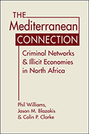 |
Latin American and Caribbean Overseas Foreign Direct Investment in China in the Twenty-First CenturyEnrique Dussel Peters, editor While overseas direct investment from China has been studied widely, OFDI to China has been largely ignored. Contributors to this volume pivot the conversation to examine macroeconomic and historical features of investment flows to China from Argentina, Brazil, Chile, Mexico, Peru, and a range of Caribbean and Central American countries, framing each case study within wider bilateral socioeconomic More > |  |
China Moves West: The Evolving Strategies of the Belt and Road InitiativeAnoushiravan Ehteshami, Benjamin Houghton, and Jia Liu, editors In September 2013, Xi Jinping announced the launch of a Chinese-led megaproject, the Belt and Road Initiative, that would transform Asia's position within the global economy. Some ten years on, the BRI, while facing significant obstacles, has gone from strength to strength. How has China’s BRI diplomacy affected its image across Asia? What does the BRI mean for Sino-US competition? More > | 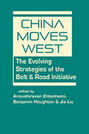 |
Waging War with Gold: National Security and the Finance Domain Across the AgesCharles A. Dainoff, Robert M. Farley, and Geoffrey F. Williams "The sinews of war," posited Cicero, "are infinite money." Can the same be said of security? Tackling this thought-provoking question, the authors of Waging War with Gold show how states across the centuries have weaponized the global finance domain—a constellation of economic, legal, and monetary relations—in order to exert influence and pursue national interests. More > | 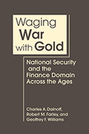 |
The BRICS in Africa: Promoting Development?Funeka Y. April, Modimowabarwa Kanyane, Yul Derek Davids, and Krish Chetty, editors The BRICS countries—Brazil, Russia, India, China, and South Africa—have become a strong engine of South-South cooperation, contributing to a significant shift in the global balance of power. They also, taken as a whole, constitute Africa's largest trading partner. The authors of this new collection consider the potential of BRICS–Africa cooperation for promoting sustainable More > | 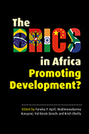 |
Asia-Pacific Small States: Political Economies of ResilienceStephen Noakes and Alexander C. Tan, editors Both the spread of Covid-19 and the intense US-China rivalry have been sources of stress for national economies throughout Asia Pacific. The authors of Asia-Pacific Small States, eschewing the usual focus on the region's powerhouses, turn their attention instead to the coping strategies of the smaller economies. Showing how these smaller states have been navigating the current turbulent times, More > |  |
The Political Economy of North Korea: Domestic, Regional, and Global DynamicsMin-Hua Chiang, editor Driven by foreign investments and exports, the economies of many East Asian countries have seen dramatic growth—but North Korea has lagged behind. Why? What are the country's prospects for development? In what ways do its external relations affect its domestic economy? To answer these questions, the authors of The Political Economy of North Korea delve deeply into the economic More > |  |
Illicit Money: Financing Terrorism in the Twenty-First CenturyJessica Davis Terrorists need money ... to recruit and train people, to buy weapons, to maintain safe houses, to carry out attacks. Which raises the question: how do they procure and protect funds to finance their operations? In Illicit Money, Jessica Davis thoroughly answers that question. Davis explores the full spectrum of terrorist finance, drawing on extensive case studies to dissect how individuals, More > |  |
Pandemic Medicine: Why the Global Innovation System Is Broken, and How We Can Fix ItKathryn C. Ibata-Arens Winner of the Andrew Price-Smith Book Award! Despite a century of advances in modern medicine, as well as the rapid development of Covid vaccines, the global pharmaceutical industry has largely failed to bring to market drugs that actually cure disease. Why? And looking further ... How can government policies stimulate investment in the development of curative drugs? Is there an untapped More > |  |
The Trickle-Up Economy: How We Take from the Poor and Middle Class and Give to the RichMark Mattern One of the most durable myths of US political economy is that we take from the rich and give to the poor—penalizing the rich for their hard work and rewarding the undeserving. Mark Mattern turns that story on its head. Documenting the everyday, institutionalized ways that income and wealth are transferred upward in the United States, Mattern shows how in fact the bottom subsidizes the More > |  |
China’s Financing in Latin America and the CaribbeanEnrique Dussel Peters Over the first two decades of the twenty-first century, China has become not only the world's largest economy, but also its largest exporter, a major importer, and the second largest source of foreign direct investment outflows. Focusing on FDI, the authors of this book look in depth at China's activities in Latin America and the Caribbean during 2000-2018. They present both More > |  |
China’s Foreign Direct Investment in Latin America and the Caribbean: Conditions and ChallengesEnrique Dussel Peters, editor In recent years, China's explosive outflow of foreign direct investment (FDI) globally can be measured in the hundreds of billions of dollars, with close to 10 billion of that going each year to Latin America and the Caribbean (LAC). The characteristics and significance of that investment in LAC are the focus of this new book. The authors first discuss FDI in the region from the Chinese More > |  |
The Renegotiation of NAFTA. And China?Enrique Dussel Peters, editor After more than a year of negotiations, the differences between NAFTA and the new United States–Mexico–Canada agreement (USMCA) are minor—especially considering the initial stance of the Trump administration in 2017—with one notable exception. The new agreement explicitly prohibits its members from negotiating free-trade agreements with "non-market economies" such More > |  |
Corporate Actors in Global Governance: Business as Usual or New Deal?Matthias Hofferberth, editor What part do/should corporate actors play in global governance? With regard to concerns over such issues as public health, education, human rights, and the environment, they arguably are influential. But what is the actual nature of their engagement, and what motivates it? What challenges do they face when they assume more responsibility in these spheres? Are they responsive to the normative More > |  |
The Geopolitics of Global Energy: The New Cost of PlentyTimothy C. Lehmann, editor In the all-encompassing energy realm, powerful state and private actors determine which of the world's many energy resources are developed ... and how societies are molded to accommodate those decisions. The authors of The Geopolitics of Global Energy delve into the energy realm, identifying the infrastructure investments of today that are shaping the use patterns and political dependencies of More > |  |
The Changing Currents of Transpacific Integration: China, the TPP, and BeyondAdrian H. Hearn and Margaret Myers, editors This comprehensive assessment of transpacific economic integration explores the many ways that new approaches to multilateral cooperation, and notably the Trans-Pacific Partnership (TPP), are transforming the regional landscape. Reflecting diverse views on the merits of new and wide-ranging agreements, the authors consider: To what extent will the TPP facilitate the US "pivot" to Asia More > |  |
Development and Underdevelopment: The Political Economy of Global Inequality, 5th editionMitchell A. Seligson and John T Passé-Smith, editors The fifth edition of this classic reader retains many of the articles that have made the book a must-assign for classes on development and political economy, but has been updated with 14 new chapters that look even more deeply at long-term factors that help to explain the origins and current trends in the gap between rich and poor. An entirely new section focuses on natural resource and More > |  |
Migrant Remittances and Development in the Global EconomyManuel Orozco Manuel Orozco moves beyond the numbers to provide a uniquely comprehensive, historically informed overview and analysis of the complex role of migrant remittances in the global economy. How do patterns of migration and remittances differ across regions? What kinds of regulatory and institutional frameworks best support the contributions of remittances to local development? What has been the More > |  |
Exploring the Global Financial CrisisAlan W. Cafruny and Herman M. Schwartz, editors Did the financial crisis of 2008 and the subsequent recession rearrange the basic structures of the global economy? To answer that fundamental question, the authors of Exploring the Global Financial Crisis tackle a number of related questions: What has happened, for example, to global flows of people, goods, and capital? Will the euro and the dollar persist as global currencies? Can governments More > |  |
Advocacy Across Borders: NGOs, Anti-Sweatshop Activism and the Global Garment IndustryShae Garwood Particularly compelling reading after the April 2013 building collapse that killed more than 1,000 garment workers in Bangladesh, Advocacy Across Borders explores the strategies, strengths—and limitations—of Northern-based NGOs that seek to improve conditions for the millions of workers in the clothing and textile industry who face long hours, inadequate wages, and abuse. Garwood More > |  |
China Engages Latin America: Tracing the TrajectoryAdrian H. Hearn and José Luis León-Manríquez, editors What inroads is China making in Latin America? In China Engages Latin America, experts from three continents provide local answers to this global question. The authors explore the multiple motivations driving the establishment of new Sino–Latin American linkages, the nature of those linkages, and the reactions that they have generated. They also examine how China–Latin America More > |  |
Migration in the Global Political EconomyNicola Phillips, editor How does the evolution of global capitalism shape patterns and processes of migration? How does migration in turn shape and intersect with the forces at work in the global economy? How should we understand the relationship between migration and development, and how is migration connected with patterns of poverty and inequality? How are processes of migration and immigration governed in different More > |  |
The Politics of Privatization: Wealth and Power in Postcommunist EuropeJohn A. Gould In this remarkable story of postcommunist politics gone wrong, John Gould explores privatization’s role in the scramble for wealth and power in postcommunist Europe. Gould engages the core debates on privatization. Does democratic development facilitate effective capitalist reform, or vice versa? How do political legacies shape privatization choices? Is simultaneous transition feasible? More > |  |
Human Rights in the Global Political Economy: Critical ProcessesTony Evans Tony Evans critically investigates the theory and practice of human rights in the current global order. Evans covers a range of contentious debates as he considers critiques of the prevailing conceptions of human rights. He then explores the changing global context of human rights issues, the nature and status of human rights within that context, and recent institutional responses. With its More > |  |
The Reform of the Bolivian State: Domestic Politics in the Context of GlobalizationAndreas Tsolakis In 2005, two decades after President Victor Paz Estenssoro's New Economic Policy heralded the beginning of a profound transformation for Bolivia, violence had become endemic in the country, the economy was weak, and political corruption was flourishing. Evo Morales was elected to the presidency in a climate of intense social conflict and disorder, promising to deconstruct the entire political More > |  |
Globalization in Africa: Recolonization or Renaissance?Pádraig Carmody Is globalization good for Africa? Pádraig Carmody explores the evolving nature and impact of globalization throughout the continent, as China, the US, and other economic powers exert their influence. Drawing especially on the cases of Chad, Sudan, and Zambia, Carmody considers whether the resource curse that has for so long plagued Africa can become a blessing. He also evaluates the More > |  |
Forced Labor: Coercion and Exploitation in the Private EconomyBeate Andrees and Patrick Belser, editors Two centuries after the abolition of the transatlantic slave trade, at least 12.3 million people are subjected to modern forms of forced labor—in rich countries, as well as poor ones. The authors of Forced Labor present state-of-the art research on the manifestations of these slavery-like practices, why they continue to survive, and how they can be eliminated. Their conceptually rich More > |  |
Crime and the Global Political EconomyH. Richard Friman, editor Crime has gone global. Conventional explanations point to ways in which criminals have exploited technological innovations, deregulation, and free markets to triumph over state sovereignty. Crime and the Global Political Economy reveals a more complex reality. Taking as a point of departure the fact that state and societal actors are challenged by—and complicit in—the expansion of More > |  |
The Myth of the Free Market: The Role of the State in a Capitalist EconomyMark A. Martinez Mark Martinez reveals how the myth of the "invisible hand" has distorted our understanding of the development and actual performance of modern capitalist markets. Martinez draws on historical cases to make it clear that political processes and the state are not only instrumental in making capitalist markets work, but that there would be no capitalist markets or wealth creation without More > |  |
The World Trade Organization: Changing Dynamics in the Global Political EconomyAnna Lanoszka Providing context for the Doha Round stalemate, this comprehensive examination of the World Trade Organization covers all the basics: the WTO's history, its structure, and its practices and concerns. Lanoszka begins with an overview of the world trading system since the end of World War II and explains the profound changes brought about by the establishment of the WTO. A discussion of the More > |  |
Foreign Investment and Domestic Development: Multinationals and the StateJenny Rebecca Kehl How is it that billions of dollars flow through the developing world without altering its reality of poverty and scarcity? Jenny Kehl explores the crucial relationship between foreign direct investment and domestic development, focusing on the wide variation in the capacity of governments to negotiate FDI to the advantage of their citizens. To isolate the influence of political factors, Kehl More > |  |
Globalization and Change in AsiaDennis A. Rondinelli and John M. Heffron, editors Globalization and Change in Asia explores three decades of adjustment on the part of governments, civil society, and the private sector to the complex new forces of international competition. Recognizing that the benefits of globalization have not accrued equally to all Asian countries, nor to all stratums of society, the authors seek lessons that can help shape development policy to effect the More > |  |
Business Power in Global GovernanceDoris Fuchs Has the political power of big business, particularly transnational corporations (TNCs), increased in our globalizing world? What, if anything, constrains TNCs? Analyzing the role of business in the global arena, this systematic and theoretically grounded book addresses these questions. Fuchs considers the implications of expanded lobbying efforts by businesses and business associations, the More > |  |
Promises Not Kept: Poverty and the Betrayal of Third World Development, 7th editionJohn Isbister The seventh edition of this perennial favorite includes discussions of major initiatives such as the Millennium Development Goals, changes in international politics and approaches to global terrorism following the US-led military operations in Afghanistan and Iraq, and updated throughout. More > |  |
The Great Turning: From Empire to Earth CommunityDavid C. Korten In his classic When Corporations Rule the World, David Korten focused on the destructive nature of the global corporate economy and helped to spark a worldwide resistance movement. Now, in The Great Turning, he goes further to argue that the corporate consolidation of power is but one manifestation of what he calls "Empire": the organization of society through hierarchy and violence that More > |  |
Global Corporate PowerChristopher May, editor Exploring the diverse ways that corporations affect the practices and structures of the global political economy, this innovative work addresses three fundamental questions: How can the corporation be most usefully conceptualized within the field of IPE? Does global governance succeed in constraining the power of multinational corporations? To what extent has the movement for corporate social More > |  |
Tourists, Migrants, and Refugees: Population Movements in Third World DevelopmentMilica Z. Bookman As travelers increasingly seek out the exotic wildlife and idyllic sunsets of the developing world, a complex relationship involving tourism, the migration of workers, and the involuntary displacement of peoples has emerged. Milica Bookman explores that relationship—and the connection between population movements and economic development in third world countries. Bookman's multicountry More > |  |
A Civil Republic: Beyond Capitalism and NationalismSeveryn T. Bruyn Severyn T. Bruyn argues that—in a world of injustice, ecological destruction, violence and instability, weapons of mass destruction, and the rise of authoritarian government—our ability to craft a secure future lies in creating a "civil republic." Bruyn envisions a system of governance that merges core human values of civil society into a political economy that has reigned More > |  |
Profiting from Peace: Managing the Resource Dimensions of Civil WarKaren Ballentine and Heiko Nitzschke, editors Providing both a means and a motive for armed conflict, the continued access of combatants in contemporary civil wars to lucrative natural resources has often served to counter the incentives for peace. Profiting from Peace offers the first comprehensive assessment of the practical strategies and tools that might be used effectively, by both international and state actors, to help reduce the More > |  |
Negotiating Privacy: The European Union, the United States, and Personal Data ProtectionDorothee Heisenberg How did the European Union come to be the global leader in setting data privacy standards? And what is the significance of this development? Dorothee Heisenberg traces the origins of the stringent EU privacy laws, the responses of the United States and other governments, and the reactions and concerns of a range of interest groups. Analyzing the negotiation of the original 1995 EU Data Protection More > |  |
Intellectual Property Rights: A Critical HistoryChristopher May and Susan K. Sell With intellectual property widely acknowledged today as a key component of economic development, those accused of stealing knowledge and information are also charged with undermining industrial innovation, artistic creativity, and the availability of information itself. How valid are these claims? Has the Trade Related Aspects of Intellectual Property Rights (TRIPs) Agreement ushered in a new, More > |  |
Guns and Butter: The Political Economy of International SecurityPeter Dombrowski, editor Reflecting the growing interest among scholars and practitioners in the relationship between security affairs and economics, this new volume explores the nature of that relationship in the first decade of the 21st century. Among the issues addressed in the book are the impact of the events of September 11 and of the US response. The authors also consider whether the challenges of the More > |  |
Getting Globalization Right: The Dilemmas of InequalityJoseph S. Tulchin and Gary Bland, editors Getting Globalization Right explores political and economic changes in seven new democracies that have in common both a movement toward greater integration with the world economy and the challenges posed by persistent or even increasing domestic economic inequalities. The authors argue that, without effective national policies to dampen the effects of globalization, the short-term impact More > |  |
Globalization and Social Exclusion: A Transformationalist PerspectiveRonaldo Munck When global economies integrate, what disintegrates as a result? The answer, Ronaldo Munck contends, is social equality. To illustrate how globalization deepens existing inequities, Munck focuses on disparities in living conditions; the feminization of poverty; the global sex trade; the effects of racism, migration, and multiculturalism; and the formation and political manifestations of social More > |  |
War Economies in a Regional Context: Challenges of TransformationMichael Pugh and Neil Cooper, with Jonathan Goodhand Confronting the corrosive influence that war economies typically have on the prospects for peace in war-torn societies, this study critically analyzes current policy responses and offers a thought-provoking foundation for the development of more effective peacebuilding strategies. The authors focus on the role played by trade in precipitating and fueling conflict, with particular emphasis More > |  |
Knowledge Power: Intellectual Property, Information, and PrivacyRenée Marlin-Bennett Knowledge Power introduces the interconnected roles of intellectual property, information, and privacy and explores the evolution of the domestic and international rules that govern them. What roles are played by governments, individuals, firms, and others in shaping our knowledge world? How will the rules that we create—or unquestioningly accept—affect the contours of global More > |  |
Gods, Guns, and Globalization: Religious Radicalism and International Political EconomyMary Ann Tétreault and Robert A. Denemark, editors Is it accurate to equate "fundamentalism" with antimodernism? What explains the growing importance of religious activists in world politics? Guns, Gods, and Globalization explores the multifaceted phenomenon of religious resurgence, ranging from the Christian right in the U.S. to ethnonationalist movements across North Africa and Asia. The authors' focus on the complex relationship More > |  |
Globalization and Inequality: Neoliberalism's Downward SpiralJohn Rapley Has the far-reaching experiment in creating a new world order along neoliberal lines succeeded? John Rapley answers with an emphatic no, contending that the rosy picture painted by neoliberal proponents of globalization was based on false assumptions. True, Rapley acknowledges, neoliberal reforms often have generated economic growth—but at a price. The resulting increase in inequality has More > |  |
Worlds Apart: Civil Society and the Battle for Ethical GlobalizationJohn D. Clark In Worlds Apart, John Clark shows us how the same opportunities and threats that have caused such rapid change in the economic and corporate worlds are also transforming the citizen's sector. More > |  |
Confronting Globalization: Economic Integration and Popular Resistance in MexicoTimothy A. Wise, Hilda Salazar and Laura Carlsen, editors Is the current model for economic globalization good for the poor or the environment? Are there alternatives? Amid rising worldwide protests that corporate elites wield too much influence over global economic governance, this book on Mexico's experience under the North American Free Trade Agreement offers insights into both questions. More > |  |
International Political Economy: State-Market Relations in a Changing Global Order, 2nd EditionC. Roe Goddard, Patrick Cronin, and Kishore C. Dash, editors Introducing the classic and contemporary ideologies of international political economy, this anthology has been carefully constructed for classroom use. Articles representing contending views of IPE are followed by selections on the international monetary system, development assistance, and international trade. With the student reader in mind, each piece is prefaced with an editors' note More > |  |
The Political Economy of Armed Conflict: Beyond Greed and GrievanceKaren Ballentine and Jake Sherman, editors Globalization, suggest the authors of this collection, is creating new opportunities—some legal, some illicit—for armed factions to pursue their agendas in civil war. Within this context, they analyze the key dynamics of war economies and the challenges posed for conflict resolution and sustainable peace. Thematic chapters consider key issues in the political economy of internal wars, More > |  |
The Hidden Assembly Line: Gender Dynamics of Subcontracted Work in a Global EconomyRadhika Balakrishnan, editor The Hidden Assembly Line demonstrates how the impact of current global economic trends—changing production patterns, dictated by multinational corporations and IMF-influenced macroeconomic policies—form the economic reality of many women workers in Asia. Presenting case studies from India, Pakistan, the Philippines, and Sri Lanka, the contributors analyze household-level changes in More > |  |
Capitalism and Justice: Envisioning Social and Economic FairnessJohn Isbister In Capitalism and Justice, John Isbister takes a practical approach to some of the most important questions of economic and social justice in the context of the global economy: How big a spread of incomes from rich to poor, for example, is consistent with social justice? Should inheritances be abolished? What sort of commitment should a rich country like the United States make to foreign aid? More > |  |
Bound: Living in the Globalized WorldScott Sernau In his accessible, straightforward introduction to one of the key issues of our time, Scott Sernau explores the trends and practices have brought us to this new global century and then relates world issues to our everyday local experiences. More > |  |
The Post-Corporate World: Life After CapitalismDavid C. Korten One of Future Survey's Super 70 books David Korten challenges capitalism's claim to being a means of creating wealth and a champion of democracy as he examines the fissure between the promises of the new global capitalism and the realities of financial insecurity, inequality, social breakdown, and environmental destruction. Rejecting the inevitability of our current trajectory, he More > | 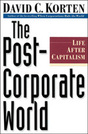 |
The International Political Economy of the Environment: Critical PerspectivesDimitris Stevis and Valerie J. Assetto, editors When considering the nature of environmental problems, many scholars and practitioners assume that—while there may be disagreement about solutions—we know what the problems are. In contrast, the authors of this volume investigate the framing of both problems and solutions to clarify the particular political dynamics and preferences that they reflect and legitimate. They test their More > | 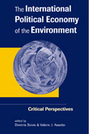 |
European Monetary Integration and Domestic Politics: Britain, France, and ItalyJames I. Walsh This book explains why three countries—Britain, France, and Italy—that have faced similar problems of high inflation and currency depreciation since the 1970s—Britain, France, and Italy—have pursued very different international monetary strategies. Walsh argues that international monetary policies produce predictable sets of winners and losers, and that policy choice is a More > |  |
Workers Without Frontiers: The Impact of Globalization on International MigrationPeter Stalker This unique assessment of a complex and contentious issue brings together the latest information on international migration in the context of a global economy. Redressing a gap in most discussions of globalization, Stalker examines how migration interacts with movements of goods and capital, and how it is closely tied to social and economic changes. He makes starkly clear the major impact that More > | |
Beyond Globalization: Shaping a Sustainable Global EconomyHazel Henderson Renowned economist and commentator Hazel Henderson’s critique of globalization sets out a panoramic vision of the changes required to reshape the global economy in the interests of social justice and sustainability. More > | 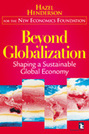 |
Racing to Regionalize: Democracy, Capitalism, and Regional Political EconomyKenneth P. Thomas and Mary Ann Tétreault, editors The intensifying proliferation of regional organizations over the last decade is explored in this volume, which focuses on the workings of APEC, the European Union, the Gulf Co-operation Council, Mercosur, and NAFTA. The authors examine a number of critical issues: How does politics shape the construction of regional agreements? To what extent do these agreements incorporate or limit economic More > | |
U.S. Politics and the Global Economy: Corporate Power, Conservative ShiftRonald W. Cox and Daniel Skidmore-Hess This thoughtful, highly original book investigates the influence of globalization on ideology and politics in the United States. Cox and Skidmore-Hess argue that U.S. policy increasingly has been motivated less by anxiety about the independence and stability of the domestic economy and more by worry about factors that might limit the participation of U.S. corporations in international markets. More > | |
Property and the Making of the International SystemKurt Burch This original work considers the emergence of the modern international system—that is, the global social context framing the diverse behaviors called international relations—in terms of the concepts of property and property rights. Burch argues that the development of "property" is a crucial aspect of contemporary claims about the modern state, sovereignty, international More > | |
Constituting International Political EconomyKurt Burch and Robert A. Denemark, editors International political economy is both a discipline and a set of global practices and conditions. This volume explores how the two are related, illustrating the changing character of the global political economy, as well as changing perspectives on that character. The authors first consider how social issues, policy concerns, and philosophical judgments help constitute IPE both as a worldview More > | |
Globalization: Critical ReflectionsJames H. Mittelman, editor This book analyzes the empirical trends constituting the globalization process in the late twentieth century and explains its underlying causes and consequences. The authors explore the globalization of production, challenges to the state system represented by the contradictory pressures of sub- and supranationalism, and linkages between regionalism and globalizing tendencies. They also consider More > | |
The Global Economy as Political SpaceStephen J. Rosow, Naeem Inayatullah, and Mark Rupert, editors As contemporary capitalism integrates the planet to an unprecedented extent, the international political economy defines and constitutes new forces, practices, and movements. Not only are power centers shifting away from Cold War poles, but also the spatial and temporal frames of social life, both domestic and international, are reorganizing. Addressing these transformations, the authors of this More > | |
World Agriculture and the GATTWilliam P. Avery, editor Agriculture—central to the interests of both the rich industrialized countries, where it is heavily subsidized, and the poor nonindustrialized countries, where it is often the principal source of export earnings—has posed a problem for the global-free-trade regime since the beginning of the GATT. Multilateral trade negotiations have continually failed to bring agriculture into the More > | |