





Sort by: Author | Title | Publication Year
BOOKS
Walcott’s Omeros: A Reader’s GuideDon Barnard Don Barnard's reader's guide plumbs the richness, subtlety, and power of Derek Walcott’s Omeros. Barnard adeptly lays out the major themes of the work, explains Walcott's geographical, historical, and autobiographical references, and explores his use of symbolism. He also highlights the qualities that make Omeros a master class in the use of form, rhythm, and rhyme and More > | 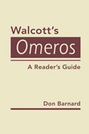 |
Moses Migrating [a novel] (new edition)Sam Selvon, with an introduction by Susheila Nasta It has been more than 25 years since Moses Aloetta became one of the “Lonely Londoners” in the novel of that name. Now—though an avowed Anglophile—he hankers for Trinidad, for sunshine, Carnival, and rum punch. With characteristic irony and delicacy of touch, Sam Selvon tells the story of Moses’s reencounter with his native land. This edition of the novel More > | ![Moses Migrating [a novel] (new edition)](/uploads/t48af27b8b6f1c.jpg) |
Monsieur Toussaint: A PlayEdouard Glissant, translated by J. Michael Dash and Edouard Glissant Edouard Glissant's Monsieur Toussaint tells the tragic story of Toussaint L'Ouverture, the charismatic leader of the revolution—the only successful slave revolt in history—that led to Haiti's independence more than two hundred years ago. Translated by J. Michael Dash in collaboration with the author, this new edition captures the striking essence of the original More > | 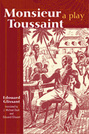 |
The Whistling Bird: Women Writers of the CaribbeanElaine Campbell and Pierrette Frickey, editors The Whistling Bird celebrates what were until recently the little-heard voices of women writers from the Caribbean. The anthology includes short stories, poetry, drama, and excerpts from novels—all rich, melodic works written with clarity and conviction. More > |  |
Caribbean Passages: A Critical Perspective on New Fiction from the West IndiesRichard F. Patteson Offering a critical perspective on new fiction from the West Indies, Patteson concentrates on five writers from diverse backgrounds and with differing perspectives and artistic strategies, who nevertheless share a commitment to an imaginative repossession of Caribbean life and consciousness. The writers discussed are Olive Senior (Jamaica), who combines devices of oral narratives and More > |  |
God's Angry Babies [a novel]Ian G. Strachan This coming-of-age novel by the accomplished Bahamian writer Ian G. Strachan traces the life of Tree Bodie as he grows up in the Yellow and White House and the nameless streets of Pompey Village, far (though not in distance) from the sanitized world of Santa Maria's luxury hotels. Against the backdrop of the internal struggles of a Caribbean island nation, Strachan tells the story of More > | |
On the Shoulder of MartiDonald Burness This collection of fiction and poetry, written by members of the military forces sent by Castro to help defeat the South Africa-backed regime in Angola, reflects the realities of painful years in Africa. The material is laced together by Burness’ narrative of past and present wars and rebellions. More > | |
Dele's Child [a novel]O.R. Dathorne Guyana-born poet-novelist Dathorne’s powerful work, set against the background of a revolution, both political and spiritual, is a compelling account of the search for ancestry and legacy. The reader learns about the past, present, and future of the chief protagonists—Dele, the saintly whore; Pietro, the impotent medical practitioner; Ianty, the corrupt politician; and Stephan, who More > | |
Finally . . . Us: Contemporary Black Brazilian Women WritersMiriam Alves, editor and translated by Carolyn Richardson Durham This is the first time that the literary works of contemporary Afro-Brazilian women have been compiled presenting a comprehensive vision of what it means to be both black and female in Brazil. Though the canon of Brazilian literature is rich in Afro-Brazilian female characters, until recently it has included only a handful of Afro-Brazilian women writers, sprinkled across the centuries. The More > |  |
Critical Perspectives on Jean RhysPierrette M. Frickey, editor Rhys, acclaimed author of Wide Sargasso Sea, Quartet, and other novels treating the alienation of a woman from the Caribbean living in European settings, has been a focus of interest both as a feminist writer and in the context of Caribbean literature. She was honored with the W. H. Smith Award in 1967 and the Council of Great Britain Award for Writers in 1979. More > | |
Bibliography of Women Writers from the Caribbean: 1831–1986Brenda F. Berrian and Aart Broek, editors This exhaustive bibliography includes creative works by Dutch-, English-, French-, and Spanish-speaking women writers from the Caribbean. The entries are grouped by language region, and within region by genre. There is also an extensive author index. More > | |
Women's Voice in Latin American LiteratureNaomi Lindstrom Women’s Voice is a detailed study of Clarice Lispector’s Laços de família, Rosario Castellanos’s Oficio de tinieblas, Marta Lynch’s La señora Ordóñez, and Silvina Bullrich’s Mañana digo basta. In deciding to focus on these, Lindstrom chose, from a wealth of literature, the authors that she felt not only express women’s More > | |
Critical Perspectives on Sam SelvonSusheila Nasta, editor This groundbreaking study of prolific Trinidadian writer Sam Selvon includes background essays, interviews with Selvon, and critical assessments of his ten novels and collected short stories. An extensive bibliography and notes on the contributors are included. In addition to Sam Selvon, the contributors to the work include Whitney Balliett, Harold Barratt, Edward Baugh, Frank Birbalsingh, E.K. More > | |
Central American Writers of West Indian OriginIan Smart This is the first book-length analysis of the emerging literature written in Spanish by contemporary Central Americans whose grandparents came from the largely English-speaking islands of the Caribbean. Smart shows how the themes of language, religion, identity, exile, the plantation, mestizaje, and interracial love are explored in this literature to their fullest pan- Caribbean potential, and how More > | |
Jose Martí: Major Poems [Bilingual Edition]José Martí, edited and with an introduction by Philip S. Foner and translated by Elinor Randall With an added introduction to place the work in context, this edition presents Cuban poet José Martí's (1853-1895) most famous poems in both Spanish and English. More > | ![Jose Martí: Major Poems [Bilingual Edition]](/uploads/t652479dd6eb10.jpg) |
Heremakhonon [a novel]Maryse Condé, translated by Richard Philcox Veronica Mercier, a sophisticated Caribbean woman teaching and living in Paris, journeys to West Africa in pursuit of her "identity." There, she becomes involved with a prominent political figure—and must find her way among the often misleading guises of ambition, idealism, and violence. Conveying a mosaic of feelings (from childhood and adolescence in Guadeloupe, university days More > | ![Heremakhonon [a novel]](/uploads/t485bfb1e727bd.jpg) |
Critical Perspectives on V.S. NaipaulRobert D. Hamner, editor This collection combines articles by Naipaul himself, reflecting his developing ideas from 1958 through the mid-1970s, with fourteen perceptive essays representing his reception among critics. More > | |