





Sort by: Author | Title | Publication Year
BOOKS
Afghanistan’s Troubled Transition: Politics, Peacekeeping, and the 2004 Presidential ElectionScott Seward Smith Scott Seward Smith focuses on Afghanistan's 2004 presidential election—the first popular election ever held there—as he explores the painstaking attempt by the United Nations to develop democratic institutions in the country. Smith thoroughly describes the personalities, policies, bureaucracies, and external factors that shaped the faltering transition process from 2001 through More > |  |
Asia Pacific in World Politics, 3rd editionDerek McDougall This new edition of Asia Pacific in World Politics reflects the impact of nearly a decade of significant events and shifts in the region: the escalation of the conflicts between China and the US and China and Taiwan, the changing regional role of Japan, growing numbers of refugees, the Covid-19 pandemic, Indonesia's increasing prominence, and much more. Updated throughout and designed to More > |  |
Asia-Pacific Small States: Political Economies of ResilienceStephen Noakes and Alexander C. Tan, editors Both the spread of Covid-19 and the intense US-China rivalry have been sources of stress for national economies throughout Asia Pacific. The authors of Asia-Pacific Small States, eschewing the usual focus on the region's powerhouses, turn their attention instead to the coping strategies of the smaller economies. Showing how these smaller states have been navigating the current turbulent times, More > |  |
Building Democracy in South Asia: India, Nepal, PakistanMaya Chadda This original analysis of South Asia's political experience with democracy in the 1990s assumes that, if democratic norms are to be universalized, they must first absorb the interpretations and experiences of the non-Western countries. Chadda contends that any discussion of democratization must be founded on mapping its course amid the constraints of state consolidation, national integration, More > |  |
China and India: Great Power RivalsMohan Malik Despite burgeoning trade and cultural links, China and India remain fierce competitors in a world of global economic rebalancing, power shifts, resource scarcity, environmental degradation, and other transnational security threats. Mohan Malik explores this increasingly important and complex relationship, grounding his analysis in the history of the two countries. Malik describes a geopolitical More > |  |
China Engages Latin America: Tracing the TrajectoryAdrian H. Hearn and José Luis León-Manríquez, editors What inroads is China making in Latin America? In China Engages Latin America, experts from three continents provide local answers to this global question. The authors explore the multiple motivations driving the establishment of new Sino–Latin American linkages, the nature of those linkages, and the reactions that they have generated. They also examine how China–Latin America More > |  |
China in World Politics: Policies, Processes, Prospects, 2nd EditionJudith F. Kornberg and John R. Faust Introducing students to China's foreign policy, the authors outline the political, security, economic, and social issues the country faces in the emerging 21st century. Each chapter of the book familiarizes the reader with the Chinese framework for analyzing the issues in question. Alternate policy choices are suggested, along with supporting data for each course of action. Discussion and More > |  |
China Moves West: The Evolving Strategies of the Belt and Road InitiativeAnoushiravan Ehteshami, Benjamin Houghton, and Jia Liu, editors In September 2013, Xi Jinping announced the launch of a Chinese-led megaproject, the Belt and Road Initiative, that would transform Asia's position within the global economy. Some ten years on, the BRI, while facing significant obstacles, has gone from strength to strength. How has China’s BRI diplomacy affected its image across Asia? What does the BRI mean for Sino-US competition? More > |  |
China Opens Its Doors: The Politics of Economic TransitionJude Howell China Opens Its Doors explains and documents the complex relationship between the politics and economics of China's recent "Open Policy," covering the period from 1978 up to the Party Congress of November 1992. Though emphasizing the political essence of this policy process, Howell also looks at the sociopolitical changes that it has engendered, including its impact on the state and More > | |
China UnderJiang ZeminHung-mao Tien and Yun-han Chu, editors China Under Jiang Zemin represents the first major scholarly effort to analyze the evolution of China’s new leadership, taking as its starting point the pivotal Fifteenth Congress of the Chinese Communist Party, held in September 1997. Proceeding from a detailed portrait of the political landscape at the opening of the Jiang Zemin era, the authors provide rich detail of the various More > | |
China's Just World: The Morality of Chinese Foreign PolicyChih-yu Shih Looking at China's foreign policy, this book focuses on the Confucian-based need of Chinese leaders to present themselves as the supreme moral rectifiers of the world order. Shih outlines the diplomatic principles cherished by the Chinese—socialism, antihegemonism, peaceful coexistence, statism, and isolationism—and explores how each has been applied in the past forty years. He More > | |
China's New Role in AfricaIan Taylor Ian Taylor explores the nature and implications of China's burgeoning role in Africa, arguing that Beijing is using Africa not only as a source of needed raw materials and potential new markets, but also to bolster its own position on the international stage. After tracing the history of Sino-African relations, Taylor addresses key current issues: What will be the long-term consequences, More > |  |
China's Rise and the Two Koreas: Politics, Economics, SecurityScott Snyder Choice Outstanding Academic Book! With China now South Korea's number one trading partner and destination for foreign investment and tourism, what are the implications for politics and security in East Asia? Scott Snyder explores the transformation of the Sino–South Korean relationship since the early 1990s. Snyder considers the strategic significance of recent developments in More > |  |
China's Rural Development Policy: Exploring the "New Socialist Countryside"Minzi Su As China strives to achieve nothing less than a "harmonious society"—despite the pronounced and institutionalized class structure that divides rural Chinese from urban, eastern from western, and rich from poor— a key element of that effort is a "new socialist countryside." Minzi Su assesses the prospects for China's rural revitalization programs now in their More > |  |
China, the Developing World, and the New Global DynamicLowell Dittmer and George T. Yu, editors With China's rise as a major player in international affairs, how have its policies toward developing countries changed? And how do those policies now fit with its overall foreign policy goals? This timely book explores the complexities of China's evolving relationship with the developing world. The authors first examine the political and economic implications of China's efforts to More > |  |
China’s Regional Relations: Evolving Foreign Policy DynamicsMark Beeson and Fujian Li Has China's much-discussed "charm offensive" come to an end? Are fears about the country's more assertive foreign policies justified? How will a rising China interact with its regional neighbors? Mark Beeson and Fujian Li address these questions by comprehensively exploring the nature, effectiveness, and implications of China's foreign policy strategy in Asia and Australia. More > |  |
Citizen Power, Politics, and the "Asian Miracle": Reassessing the DynamicsO. Fiona Yap Departing from characterizations of Asian governments as benevolent overlords and Asian citizens as politically naive and/or docile, Fiona Yap explores the dynamic interactions between state and citizenry in the arena of economic policies. Yap focuses on the cases of Malaysia, Singapore, South Korea, and Taiwan to show that, with the strategic use of activities ranging from labor unrest to More > |  |
Collective Violence in IndonesiaAshutosh Varshney, editor Since the end of Suharto's so-called New Order (1966-1998) in Indonesia and the eruption of vicious group violence, a number of questions have engaged the minds of scholars and other observers. How widespread is the group violence? What forms—ethnic, religious, economic—has it primarily taken? Have the clashes of the post-Suharto years been significantly more widespread, or worse, More > |  |
Consolidating Democracy in South KoreaLarry Diamond and Byung-Kook Kim, editors Since its inception in 1987, Korean democracy has been an arena of continual drama and baffling contradictions: periodic waves of societal mobilization and disenchantment; initial continuity in political leadership, followed by the successive election to the presidency of two former opposition leaders and the arrest of two former heads of state; a constant stream of party renamings and More > | |
Creating the Zhuang: Ethnic Politics in ChinaKatherine Palmer Kaup Managing ethnic nationalism within the People's Republic of China has become increasingly challenging. As new reforms widen economic disparities between minorities and the Han majority, even the most assimilated of minorities, the Zhuang, have begun to demand special treatment from the central government. The Chinese Communist Party (CCP) officially recognized the sixteen million Zhuang as More > |  |
Democratic Reform in Japan: Assessing the ImpactSherry L. Martin and Gill Steel, editors Widespread dissatisfaction in Japan in the 1990s set the stage for numerous political reforms aimed at enhancing representation and accountability. But have these reforms in fact improved the quality of Japanese democracy? Through the lens of this question, the authors explore contemporary Japanese politics at the national, local, and grassroots levels. Their systematic analysis of when and how More > |  |
Democratization in Hong Kong—and China?Lynn T. White III Hong Kong and its relationship with China make for a uniquely intriguing study in democratization. What has hindered or caused greater popular sovereignty in Hong Kong? Over what time period and under what conditions could further democratization occur? Addressing these questions through the lens of comparative democratization theories, Lynn White explores Hong Kong’s complicated More > |  |
Development and Democracy in IndiaShalendra D. Sharma This broad, historically grounded study examines the relationship between democratic governance and economic development in postindependence India (1947-1998). Sharma addresses the fundamental paradox of India’s political economy: why have five decades of democratically guided strategies failed to reconcile economic growth with redistribution or to mitigate the condition of extreme poverty More > | |
Dilemmas of Reform in Jiang Zemin's ChinaAndrew J. Nathan, Zhaohui Hong, and Steven R. Smith, editors As China enters a stage of economic reform more challenging and risky than any that has gone before, the pressure for political liberalization grows apace. This volume explores the dilemmas of this new phase of complex change. The authors—most of whom write with the insight that comes from having lived and worked within the Chinese system—analyze how the evolution of China’s More > | |
Dynamics of Democracy in Taiwan: The Ma Ying-jeou YearsKharis Templeman, Yun-han Chu, and Larry Diamond, editors During the Ma Ying-jeou presidency in Taiwan (2008–2016), confrontations over relations with mainland China stressed the country’s institutions, leading to a political crisis. Nevertheless, its democracy proved to be resilient. The authors of Dynamics of Democracy in Taiwan explore key aspects of the complicated Ma era, including party politics and elections, the sources of Ma's More > |  |
Foreign Aid Competition in Northeast AsiaHyo-sook Kim and David M. Potter, editors In recent years, China, Taiwan, South Korea, and Japan have been transformed from aid recipients to aid donors, raising a number of questions. What motivated these four countries to embark on aid programs? Do their policies represent new approaches to poverty alleviation? Do they reinforce or disrupt the emerging consensus within the international community on aid policy harmonization and More > |  |
From Opposition to Power: Taiwan's Democratic Progressive PartyShelley Rigger On March 18, 2000, Taiwan's voters stunned the world by choosing Chen Shui-bian, the candidate of the opposition Democratic Progressive Party (DPP), to be their president. A host of new issues quickly became the subject of debate. What is the DPP? Where did it come from and what does it stand for? How will it use its newly won power? Will it risk war with mainland China in pursuit of More > | |
From Party Politics to Militarism in Japan, 1924–1941Kitaoka Shinichi The years in Japan between June 1924, when a coalition cabinet of three political parties was established, and December 1941, when the country declared war on the United States and Britain, were characterized first by nearly a decade of domestic and international cooperation—and then a period of oppressive militarism. Kitaoka Shinichi captures the essence of these years in Japan's More > | 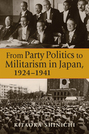 |
History, Memory, and Politics in Postwar JapanIokibe Kaoru, Komiya Kazuo, Hosoya Yūichi, Miyagi Taizō, and the Tokyo Foundation for Policy Research’s Political and Diplomatic Review Project, editors Memories can be shared—or contested. Japan and Korea, just one case in point, share centuries of intertwined history, the nature of which continues to be disputed, particularly with regard to World War II. The authors of History, Memory, and Politics in Postwar Japan explore Japan's historical narratives, and their impact on both domestic politics and diplomatic relations, as they More > | 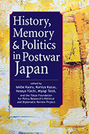 |
Imperial Burdens: Countercolonialism in Former French IndiaWilliam F.S. Miles Few people are aware that, throughout the British raj, France managed to retain a foothold in parts of India. French India survived for a full fifteen years after the Union Jack was lowered in Delhi, and as a result of French colonization, there remain today, scattered throughout the Union Territory of Pondicherry, thousands of ethnic Indians who still possess French citizenship. The ensuing More > | 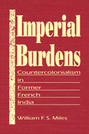 |
Indonesia: State and Society in TransitionJemma Purdey, Antje Missbach, and Dave McRae Indonesia remains a country in transition even now, some two decades after its extraordinary shift from authoritarianism to democracy and from economic crisis to a rapidly growing economy. What explains the trajectory of that shift? What challenges does this island nation of 270 million people—with the world's largest Muslim population—face now, as the quality of democratic life More > | 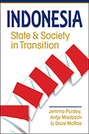 |
Japan in International Politics: The Foreign Policies of an Adaptive StateThomas U. Berger, Mike M. Mochizuki, and Jitsuo Tsuchiyama, editors How have shifts in both the international environment and domestic politics affected the trajectory of Japanese foreign policy? Does it still make sense to depict Japan as passive and reactive, or have the country's leaders become strategic and proactive? Japan in International Politics presents a nuanced picture of Japanese foreign policy, emphasizing the ways in which slow, adaptive changes, More > | 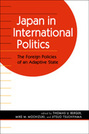 |
Japan's Budget Politics: Balancing Domestic and International InterestsTakaaki Suzuki What is the source of the increasing politicization of Japan's budgetary policy? Takaaki Suzuki explores this question, finding the answer in the the interplay of domestic and international politics from the early 1970s through the 1990s. Suzuki points out that, just as modern state leaders must strike a balance between the appropriate roles of the market and the state in determining how More > |  |
Japan's Security Agenda: Military, Economic, and Environmental DimensionsChristopher W. Hughes Long constrained as a security actor by constitutional as well as external factors, Japan now increasingly is called to play a greater role in stabilizing both the Asia-Pacific region and the entire international system. Japan's Security Agenda explores the country's diplomatic, political, military, and economic concerns and policies within this new context. Hughes looks closely More > |  |
Japan: The Burden of SuccessJean-Marie Bouissou On publication in France, Jean-Marie Bouissou's depiction of modern Japan was acclaimed as "the best of its kind." This English-language translation has been updated to cover events through 2001 and augmented with an overview of Japan's pre-1945 historical legacy. In the tradition of French scholarship—which rejects a narrowly focused approach—the book encompasses More > |  |
Maritime Asia vs. Continental Asia: National Strategies in a Region of ChangeShiraishi Takashi Shiraishi Takashi reflects on the diplomatic challenges facing the countries of Asia in today's geopolitical order, exploring historical context, long-term trends, and current strategies. The tectonic shifts in the global order are having a particularly dramatic impact in Asia, with its combined economy now larger than that of either North America or Europe. As he explores the nature of More > |  |
Masculinity and Japan’s Foreign RelationsYumiko Mikanagi Transformations in both Japan's domestic culture and its foreign relations in the last two decades have led to, among other outcomes, a shift to a more militarized defense policy. Yumiko Mikanagi explores an intriguing aspect of this shift: changes in what is considered masculine in contemporary Japanese society. Tracing the alternations between dominant "warrior" and More > |  |
Militant Islam in Southeast Asia: Crucible of TerrorZachary Abuza Choice Outstanding Academic Book! Islamic extremism in Southeast Asia has moved beyond a matter of local concern to one of global significance—as the events of the past decade have so clearly demonstrated. Drawing on intensive on-the-ground investigation and interviews with key militants, Zachary Abuza explains the emergence of radical Islamist groups in the region, examines Al-Qaida's More > |  |
Mixed Motives, Uncertain Outcomes: Defense Conversion in ChinaJorn Brömmelhörster and John Frankenstein, editors Mixed Motives, Uncertain Outcomes looks critically at China's efforts to adapt its vast military- industrial complex to the service of its socialist market economy. The authors—all of whom have witnessed or participated first-hand in the country's defense conversion—offer political, macroeconomic, business, and military perspectives on this complex issue. The book places the More > | |
Money Politics in Japan: New Rules, Old PracticesMatthew Carlson Have the far-reaching political reforms enacted in Japan more than a decade ago succeeded in reducing corruption and the high costs of elections? Or have the results been "business as usual"? Matthew Carlson analyzes the ebb and flow of money in Japanese politics, drawing on extensive fieldwork and detailed campaign-finance data to investigate campaign practices, party strategies, and More > |  |
Mongolia’s Foreign Policy: Navigating a Changing WorldAlicia Campi Strategically located at the crossroads of Central Asia, China, and Russia, Mongolia has long attracted the attention of major world powers. How has this traditionally nomadic, but resource rich, country used a "Wolf Strategy" to establish its own place in the modern world? What challenges does it now face? Answering these questions, Alicia Campi provides a multifaceted examination of More > |  |
Myanmar: The Dynamics of an Evolving PolityDavid I. Steinberg, editor What issues will Myanmar need to address as it moves beyond the immediate complexities of a transition from an authoritarian state to a more pluralistic polity? How will the new government navigate the challenges—some new, some old—of increasing public participation, persistent coercive forces, economic transformation, ethnic tensions, varying conceptions of the role of law, and more? More > |  |
Nontraditional Security Challenges in Southeast Asia: The Transnational DimensionAmy L. Freedman and Ann Marie Murphy With the countries of Southeast Asia increasingly challenged by a plethora of nontraditional security issues—climate change, food and water security, infectious diseases, and migration key among them—a number of important questions have emerged: What national and regional efforts are being made to address these issues? Why have some approaches proven more successful than others? How do More > |  |
North Korea: The Politics of Unconventional WisdomHan S. Park Despite isolation, an impoverished economy, mass starvation, and the challenge of leadership succession, North Korea's socialist state continues to survive. Han Park explores the reasons for this resilience, concentrating on the implications of mass beliefs and political ideology for the country's political life. Park begins with an examination of Juche, or self-reliance, the ideology More > |  |
Pacific Asia in Quest of DemocracyRoland Rich What does democracy look like in Pacific Asia? Can democratic governance in the region survive the challenges of corruption, violence, and soft authoritarianism? What impact are economic pressures likely to have? These are among the broad questions tackled in Pacific Asia in Quest of Democracy, a comparative study of democratic structures and practices in Indonesia, the Philippines, South Korea, More > |  |
Party Politics in East Asia: Citizens, Elections, and Democratic DevelopmentRussell J. Dalton, Doh Chull Shin, and Yun-han Chu, editors Assessing the trajectory of democratization in East Asia, this volume offers a systematic and tightly integrated analysis of party-system development in countries across the region. The authors utilize unprecedented cross-national survey data to examine the institutional structure of party systems, the range of choices these systems represent, and their connection to voting preferences. They also More > |  |
Peacebuilding and Transitional Justice in East TimorJames DeShaw Rae Did the United Nations successfully help to build a just, peaceful state and society in postconflict East Timor? Has transitional justice satisfied local demands for accountability and/or reconciliation? What lessons can be learned from the UN’s efforts? Drawing on extensive field work, James DeShaw Rae offers a grassroots perspective on the relationship between peacebuilding and More > |  |
Political Change in China: Comparisons with TaiwanBruce Gilley and Larry Diamond, editors How might China become a democracy? And what lessons, if any, might Taiwan's experience of democratization hold for China's future? The authors of this volume consider these questions, both through comparisons of Taiwan's historical experience with the current period of economic and social change in the PRC, and through more focused analysis of China's current, and possible future, More > |  |
Political Islam and Democracy in the Muslim WorldPaul Kubicek Belying assertions of the incompatibility of Islam and democracy, many Muslim-majority countries are now or have been democratic. Paul Kubicek draws on the experiences of those countries to explore the relationship between political manifestations of Islam and democratic politics. Kubicek's comparative analysis allows him to highlight the common features that create conditions amenable to More > |  |
Political Islam in Southeast AsiaGordon P. Means Gordon Means traces the evolution of Islamic politics in Southeast Asia, ranging from the early arrival of Islam in the region to the challenges it generates, and faces, today. Means’s analysis encompasses the events and actions shaping Islamic politics, as well as the impact of Islamic politics on government and public policy outcomes. It also offers insightful answers to such questions More > |  |
Politics and Society in Contemporary China, 2nd editionElizabeth Freund Larus This acclaimed introduction to China's politics and policies has been extensively revised and thoroughly updated not only to focus on the Xi Jinping era, but also to be even more accessible to students. Elizabeth Larus concisely captures the dynamism of Chinese politics. From local politics to the judicial system, from minority issues to defense policy, from the Belt and Road Initiative to More > |  |
Politics in East Asia: Explaining Change and ContinuityTimothy C. Lim This systematic, innovative introduction to the dynamic politics and political economies of China, Japan, North Korea, South Korea, and Taiwan teaches students how to think analytically, critically, and independently about the most significant developments in the region. The text offers in-depth coverage of the unique experiences of each country, all within the framework of an explicit More > |  |
Renovating Politics in Contemporary VietnamZachary Abuza Moving from the 1950s to the present, Zachary Abuza explores Vietnamese politics and culture through the lens of the internal debates over political reform. Abuza focuses on issues of representation, intellectual freedom, the rise of civil society, and the emergence of a "loyal opposition," assessing the prospects for change. He finds that, while some mildly dissident groups may add More > | |
Restructuring Political Power in China: Alliances and Opposition, 1978-1998An Chen This systematic study of China's structural transformation during the past two decades emphasizes the balance-of-power game so ably played by Deng Xiaoping and others among the post-Mao national leadership. Chen argues that to prevent party cadre opposition to market restructuring—the nemesis of change in other communist states—national leaders manipulated legislative channels and More > | |
Russia’s Far East: New Dynamics in Asia Pacific and BeyondRensselaer Lee and Artyom Lukin The strategically pivotal Russian Far East—a vast expanse stretching from Lake Baikal to the Pacific Ocean—is notable not only for its rich natural resources, but also for the economic challenges, internal dissent, and risks of foreign encroachment that it faces. Rensselaer Lee and Artyom Lukin explore the history, economics, and politics of the RFE in the context of its geopolitical More > |  |
South Korea’s New Nationalism: The End of “One Korea”?Emma Campbell Why have traditional views of national identity in South Korea—views that for years drove a demand for reunification—been challenged so dramatically in recent years? What explains the growing ambivalence and even antagonism of South Korean young people toward unification with North Korea? Emma Campbell addresses these related puzzles, exploring the emergence of a new kind of More > |  |
State and Nation in South AsiaSwarna Rajagopalan What makes a national community out of a state? Addressing this fundamental question, Rajagopalan studies national integration from the perspective of three South Asian communities—Tamilians in India, Sindhis in Pakistan, and Tamils in Sri Lanka—that have a history of secessionism in common, but with vastly different outcomes. Rajagopalan investigates why integration is relatively More > |  |
State and Society in China's Political Economy: The Cultural Dynamics of Socialist ReformChih-yu Shih As China's reforms take root, the differences between the traditional value of harmony and the socialist norm of class struggle are becoming increasingly obscured. Chinese citizens are, in fact, theoretically allowed—even encouraged—to be socialist and profit-driven at the same time. Chih-yu Shih looks at this precarious dyad, demonstrating what reform has done to the More > | |
Taiwan's Democracy Challenged: The Chen Shui-bian YearsYun-han Chu, Larry Diamond, and Kharis Templeman, editors When Chen Shui-bian, Taiwan's first non-Kuomintang president, left office in 2008, his tenure was widely considered a disappointment. More recent events, however, suggest the need for a reassessment of this crucial period in Taiwan's political development. Taiwan's Democracy Challenged provides that assessment, considering key facets of both the progress toward and the obstacles to More > | 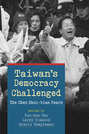 |
Taiwan's Security Policy: External Threats and Domestic PoliticsMichael S. Chase Confounding expectations, Taiwan reduced its military spending for many years even as its sole adversary, the People's Republic of China, modernized its military and significantly increased its defense budget. Michael Chase examines the key factors that have shaped Taiwan's security policy over a span of three decades. Chase explores both the role of US security assurances in formulating More > |  |
Taiwan: The Development of an Asian TigerHans Stockton and Yao-Yuan Yeh, eds. How did Taiwan transform itself from a "least developed country" into an Asian Tiger? How did it become a successful, multiparty democracy after years of authoritarian rule? Why do its relations with China and the US remain critical? The authors address these questions as they assess Taiwan's trajectory since 1949 in the political, economic, and social spheres. They also consider More > |  |
Taiwan’s Political Economy: Meeting Challenges, Pursuing ProgressCal Clark and Alexander C. Tan Taiwan's economic and political transformation was once considered a model for developing nations, but in recent decades, the momentum has stalled. Why? Cal Clark and Alexander Tan explain the country's paradoxical political economy, tracing its achievements and exploring its challenges. The authors appraise Taiwan's hard-won accomplishments—a legitimate democracy and a More > |  |
Thai Politics: Between Democracy and Its DiscontentsDaniel H. Unger and Chandra Mahakanjana The prospects for Thailand's emergence as a democracy seemed strong in the 1990s. Yet, as most recently demonstrated by military coups in 2006 and 2014, that hasn't happened. Why not? Why have factors typically considered advantageous for democratization turned into barriers? Is there a uniquely Thai reason that democratization efforts have failed? More > |  |
The Changing Dynamics of Southeast Asian PoliticsJörn Dosch Focusing on the nexus between global, regional, and national dynamics in Southeast Asia, Jörn Dosch explores the profound political changes that have occurred in recent years both within the region and in its international relations. Dosch first examines the realm of foreign policy, with an emphasis on the link between democratization and the conduct of foreign affairs. Subsequent chapters More > |  |
The New ASEAN in Asia Pacific and BeyondShaun Narine Refuting criticisms that call into question the effectiveness, and even the purpose, of ASEAN, Shaun Narine traces the organization's political and economic development and explores its impact within Southeast Asia and beyond. Narine considers ASEAN's role both regionally and with regard to the external powers—China, the United States, Japan, Russia, and increasingly More > |  |
The Political Economy of North Korea: Domestic, Regional, and Global DynamicsMin-Hua Chiang, editor Driven by foreign investments and exports, the economies of many East Asian countries have seen dramatic growth—but North Korea has lagged behind. Why? What are the country's prospects for development? In what ways do its external relations affect its domestic economy? To answer these questions, the authors of The Political Economy of North Korea delve deeply into the economic More > |  |
The Rise of China’s Industrial Policy, 1978 to 2020Barry Naughton Can China's remarkable, rapid emergence as a large economy and technological power be attributed to specific policies, and more generally to a Chinese program of industrial policy? More simply put: What is it that China has done right? This is the fundamental question that Barry Naughton addresses in his extended essay. Disentangling the threads of China's industrial policies since More > |  |
The Struggle for Civil Society in Central Asia: Crisis and TransformationCharles Buxton Charles Buxton traces the gradual establishment of the civil society sector in the five former Soviet republics of Central Asia, countries that find themselves today negotiating a complicated path between capitalist and socialist systems. More > |  |
The US-South Korea Alliance: Meeting New Security ChallengesScott Snyder, editor How can the United States and South Korea best cooperate to address new security challenges? Can the US-ROK alliance serve to advance South Korea's interests and at the same time help the US to more effectively pursue its own global and regional security objectives? In the context of these questions, the authors explore the possibilities for enhanced cooperation in both traditional and More > | 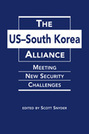 |
Turkey and Its Neighbors: Foreign Relations in TransitionRonald H. Linden, Ahmet O. Evin, Kemal Kirişci, Thomas Straubhaar, Nathalie Tocci, Juliette Tolay, Joshua W. Walker Recent years have seen dramatic changes in the nature, direction, and impact of Turkey's foreign relations in its neighborhood—a region that encompasses Europe, the Middle East, the Black and Caspian seas, and the Caucasus. The authors of this original collection explore those changes, the causes behind them, and their impact on Turkey's ties with its traditional allies in the More > | 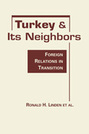 |
Understanding Contemporary Asia Pacific, 2nd editionKatherine Palmer Kaup, editor Understanding Contemporary Asia Pacific provides a comprehensive introduction to one of the most complex and rapidly changing regions in the world today. This thoroughly revised new edition reflects more than a decade of major developments in the region (encompassing China, Japan, the Koreas, and all of the ASEAN member states), including the impact of the 2020 coronavirus pandemic. With More > | 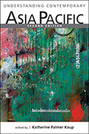 |
Understanding Contemporary China, 5th editionRobert E. Gamer and Stanley W. Toops, editors China today bears little resemblance to the country introduced in the first edition of Understanding Contemporary China, published nearly two decades ago. Even in just the past five years, dramatic changes have occurred under the leadership of President Xi Jinping. This new edition of the book reflects those changes, exploring the impact of new domestic policies; China's role as a behemoth More > |  |
What Is Political Islam?Jocelyne Cesari Honorable mention for ISA's Religion and International Relations Section Book Award! The debate continues unabated: Is political Islam decipherable through the tenets of the Islamic tradition—or is it a tool of secular actors who shrewdly misuse religious references? Is it an expression of modernity, or a return to the past? Eschewing these dichotomies, Jocelyne Cesari demystifies the More > | 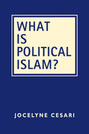 |
Why India MattersMaya Chadda Why is India's rise on the world stage so controversial? How can a state that is losing authority to its regions at the same time grow in international importance? Exploring an apparent paradox, Maya Chadda shows how culture, politics, wealth, and policy have combined to forge a distinctive Indian path to power, both nationally and in the international arena. More > |  |
Will This Be China’s Century?: A Skeptic’s ViewMel Gurtov Mel Gurtov takes issue with the widespread view that China is on the way to rivaling or even displacing the United States as the dominant world power. Gurtov identifies serious constraints that will keep the country's leadership focused for the foreseeable future on challenges at home. Arguing that China's economic rise has exacerbated problems of social inequality, environmental More > |  |
Xi Jinping’s China: The Personal and the PoliticalStig Stenslie and Marte Kjær Galtung With steely determination, Xi Jinping has forged his way to absolute power at home, consolidated China's role as a global superpower, and promoted instrumental myths about his life. All the while, in many ways he has remained a mystery. Which is a problem, assert Stig Stenslie and Marte Kjær Galtung, because to understand China today, it is essential to understand Xi. Who is he? What More > |  |