





Sort by: Author | Title | Publication Year
BOOKS
Civil Society in Syria and Iran: Activism in Authoritarian ContextsPaul Aarts and Francesco Cavatorta, editors What are the dynamics of civic activism in authoritarian regimes? How do new social actors—many of them informal, "below the radar" groups—interact with these regimes? What mechanisms do the power elite employ to deal with societal dissidence? The authors of Civil Society in Syria and Iran explore the nature of state-society relations in two countries that are experiencing More > |  |
My Memoirs: Half a Century of the History of Iraq and the Arab CauseTawfiq al-Suwaydi, translated by Nancy Roberts and with an Introduction by Antony T. Sullivan These memoirs of the distinguished Iraqi statesman Tawfiq al-Suwaydi (1892-1968) evocatively recapture a now largely vanished Arab world—and are an eloquent reminder that Iraq was once a far more open and tolerant society than it is today. Al-Suwaydi served as Iraq's prime minister three times (1929, 1946, 1950), as foreign minister on numerous occasions, and as ambassador to Iran, More > |  |
The Political Economy of Education in the Arab WorldHicham Alaoui and Robert Springborg, editors Despite substantial spending on education and robust support for reform both internally and by external donors, the quality of education in many, if not most, Arab countries remains low. Which raises the question: why? The authors of The Political Economy of Education in the Arab World find answers in the authoritarian political economies that shape the architecture of national governance More > |  |
Politics and Society in the Contemporary Middle East, 3rd editionMichele Penner Angrist, editor The rise and decline of ISIS in Iraq and Syria. Deepening authoritarianism in Turkey. The return to military-led rule in Egypt. The impact of Crown Prince Mohammad bin Salman in Saudi Arabia. Heightened sectarian tensions throughout the region. These are among the many current topics covered in the third edition of the acclaimed Politics and Society in the Contemporary Middle East. With the More > |  |
Religion and Politics in Saudi Arabia: Wahhabism and the StateMohammed Ayoob and Hasan Kosebalaban, editors Choice Outstanding Academic Book! What is Wahhabism? What is its relationship with the Saudi state? Does it play a part in Islamist terrorist threats? These are among the complex questions tackled in Religion and Politics in Saudi Arabia. Moving from the historical, social, and political contexts in which Wahhabism originated and flourished to its current internal divisions and its impact on More > |  |
Party Politics and Social Cleavages in TurkeyErgun Özbudun Despite radical changes in Turkish politics since the transition to a multiparty system in the mid-1940s, the center-right parties have consistently won an electoral majority. Why? How have they managed to maintain such a firm hold in the face of social cleavages that pit modernizing, secularist state elites against a conservative and pious majority? Ergun Özbudun uses the lens of More > |  |
Legislative Politics in the Arab World: The Resurgence of Democratic InstitutionsAbdo Baaklini, Guilain Denoeux, and Robert Springborg The vitality and significance of parliaments in the Arab world is one of the essential—but overlooked—stories of political life in the 1990s. Baaklini, Denoeux, and Springborg present the first comprehensive, comparative analysis of modern Arab legislatures. Drawing on their extensive experience as both scholars and project consultants, the authors Yemen). Their work is of critical More > |  |
Coalition Politics and the Iraq War: Determinants of ChoiceDaniel F. Baltrusaitis Why do states join ad hoc military coalitions? What motivated South Korea to contribute significantly to the Iraq War "coalition of the willing," while such steadfast allies as Turkey and Germany resisted US pressure to become burden-sharing partners? Drawing on his extensive examination of South Korean, German, and Turkish politics in the approach to and during the Iraq War, Daniel More > |  |
Building Rule of Law in the Arab World: Tunisia, Egypt, and BeyondEva Bellin and Heidi E. Lane, editors How might Arab countries build the foundations for rule of law in the wake of prolonged authoritarian rule? What specific challenges do they confront? Are there insights to be gained from comparative analysis beyond the region? Exploring these questions, the authors of Building Rule of Law in the Arab World provide a theoretically informed, empirically rich account of key issues facing the More > |  |
Minorities and the State in the Arab WorldOfra Bengio and Gabriel Ben-Dor, editors Questions of identity and ethnicity have always been part of the intricate web of politics in the Arab World, but the recent expansion of political participation has made these issues more political, more visible, and more acute. This book offers a comprehensive discussion of minorities and ethnic politics in eight Arab countries. Focusing on the strategic political choices made by minorities, More > |  |
The Kurds of Iraq: Building a State Within a StateOfra Bengio Ofra Bengio explores the dynamics of relations between the Kurds of Iraq and the Iraqi state from the inception of the Baath regime to the present. Bengio draws on a wealth of rich source materials to carefully trace the evolution of Kurdish national identity in Iraq. Dissecting the socioeconomic, political, and ideological transformations that Iraqi Kurdish society has undergone across some More > |  |
Political Liberalization & Democratization in the Arab World: V. 1, Theoretical PerspectivesRex Brynen, Bahgat Korany, and Paul Noble, editors Long dominated by authoritarian regimes, the Arab World is now experiencing a variety of factors—both internal and external—-that pose the challenge of change. Significant degrees of political liberalization have occurred already in Egypt, Lebanon, Jordan, and Kuwait, although the extent to which this presages eventual democratization is far from self-evident. Elsewhere—for More > | |
Beyond the Arab Spring: Authoritarianism and Democratization in the Arab WorldRex Brynen, Pete W. Moore, Bassel F. Salloukh, and Marie-Joëlle Zahar For years the authoritarian regimes of the Arab world displayed remarkable persistence. Then, beginning in December 2010, much of the region underwent rapid and remarkable political change. This volume explores the precursors, nature, and trajectory of the dynamics unleashed by the Arab Spring. The authors focus on the complex forces that have sustained authoritarianism in the region, as More > |  |
Turkey in Transition: The Dynamics of Domestic and Foreign PoliticsGürkan Çelik and Ronald H. Linden, editors The ongoing turbulence in Turkey's domestic and international politics raises a number of crucial questions. What explains the movement toward one-party, and even one-person, rule? What role does Islam play in the ideology and policies of the ruling party and its leader, Recep Tayyip Erdoğan? Is the country's long commitment to secular rule a thing of the past—and if so, with what More > |  |
What Is Political Islam?Jocelyne Cesari Honorable mention for ISA's Religion and International Relations Section Book Award! The debate continues unabated: Is political Islam decipherable through the tenets of the Islamic tradition—or is it a tool of secular actors who shrewdly misuse religious references? Is it an expression of modernity, or a return to the past? Eschewing these dichotomies, Jocelyne Cesari demystifies the More > |  |
The Whistleblower of Dimona: Israel, Vanunu, and the BombYoel Cohen In 1986, Mordechai Vanunu, a technician at Israel's highly secret nuclear arms research center at Dimona, disclosed highly classified details about Israel's nuclear arms program to the London Sunday Times. As a result, Vanunu was kidnapped from London and taken back to Israel where, after a closed- door trial, he was sentenced to eighteen years imprisonment for espionage and More > |  |
The Great Powers in the Middle East, 1919-1939Uriel Dann, editor Perhaps the most critical period in the development of modern Middle Eastern politics occurred between the two world wars. Britain and France vied for influence and control in the region by making conflicting promises to the leaders of emergent Arab nationalism as well as to those bent on building a Jewish national home in Palestine. With the rise of Hitler, the area took on increased strategic More > |  |
The United Arab Emirates: A Study in SurvivalChristopher M. Davidson The United Arab Emirates has remained a mainstay of stability in an increasingly volatile Middle East, managing to maintain a traditional polity despite the impact of rapid modernization and globalization. This in-depth study explores the many contradictions that characterize the UAE and its position within the international system. Davidson first provides a detailed historical More > |  |
Teaching Islam: Textbooks and Religion in the Middle EastEleanor Abdella Doumato and Gregory Starrett, editors Much has been made of the role that Saudi Arabia's education system played in fostering the hatred that fueled the September 11 terror attacks. But do Saudi textbooks deserve to be faulted for fostering violence? And have Wahhabi ideas infiltrated the Islamic textbooks used in public schools throughout the Middle East? Confronting these questions, Teaching Islam explores the political and More > |  |
The Politics of Sacred Space: The Old City of Jerusalem in the Middle East ConflictMichael Dumper Sacred to three traditions, the Old City of Jerusalem is the Gordian knot at the center of the Middle East conflict. This book explores how religious and political interests compete for control of this sacred space, and how that competition affects the Middle East peace process. Dumper analyzes the religious dynamics in the Old City in political terms, investigating rivalries and tensions at More > |  |
Youth and Revolution in the Changing Middle East, 1908–2014Haggai Erlich Though there is much discussion of the role of youth in recent upheavals in the Middle East, there are few serious analyses of just what that role has been. Haggai Erlich sheds important light on this topic, focusing on the activism of educated young people in creating revolutionary change and the part played by higher education in shaping new generations of youth. Moving from the nineteenth More > |  |
Political Islam: Revolution, Radicalism, or Reform?John L. Esposito, editor For more than a decade, policymakers and observers in the Muslim world and the West have struggled with the specter of political Islam—or "Islamic fundamentalism"—often confounded by myriad and contradictory images. This book offers a thorough, objective examination of the impact of political Islam on domestic and international politics in countries ranging from North Africa More > | |
Turkey and Its Neighbors: Foreign Relations in TransitionRonald H. Linden, Ahmet O. Evin, Kemal Kirişci, Thomas Straubhaar, Nathalie Tocci, Juliette Tolay, Joshua W. Walker Recent years have seen dramatic changes in the nature, direction, and impact of Turkey's foreign relations in its neighborhood—a region that encompasses Europe, the Middle East, the Black and Caspian seas, and the Caucasus. The authors of this original collection explore those changes, the causes behind them, and their impact on Turkey's ties with its traditional allies in the More > |  |
Democratic Values in the Muslim WorldMoataz A. Fattah Is Islam compatible with democracy? Despite the seemingly endless debate on this issue, Moataz Fattah's study is a rare investigation of actual Muslim beliefs about democracy across numerous and diverse Islamic societies. Fattah's survey analysis of more than 31,000 Muslims in 34 countries (including 3 countries in which Muslims live as minorities), enhanced by focus group discussions, More > |  |
The Arab Gulf States: Beyond Oil and IslamSean Foley If petroleum buys political legitimacy in the Arab Gulf states, how can we explain the rise of dissent and calls for political reform despite sustained oil revenues? The answer, according to Sean Foley, lies in political, social, and economic dynamics that have been brewing beneath the surface for more than a decade—and that are slowly shifting the balance of political power. While not More > |  |
Changing Saudi Arabia: Art, Culture, and Society in the KingdomSean Foley T. E. Lawrence once observed that Saudi Arabia had "so little art" that it could "be said to have no art at all." Whether that was once the case is arguable. But that it is not the case now is clear in Sean Foley's Changing Saudi Arabia. Exploring the contemporary arts movement in Saudi Arabia in the context of the kingdom's changing political realities, Foley finds More > |  |
Narrating the Nile: Politics, Identities, CulturesIsrael Gershoni and Meir Hatina, editors The authors of Narrating The Nile seek to encourage the study of Egypt, Sudan, and Ethiopia not only as autonomous entities, but also as part of the Nile region, a shared theater of experiences, national identities, and collective memories. Combining in-depth historical studies and broad interdisciplinary discussions, they provide fresh perspectives on the region's politics and More > |  |
A History of Egyptian Communism: Jews and Their Compatriots in Quest of RevolutionRami Ginat Rami Ginat offers an entirely new reading of the evolution of communism in Egypt, including the central role of Egyptian Jews in both its development and its impact on Egypt and the wider Middle East. Drawing deeply on previously inaccessible original sources, Ginat traces a story of intrigue and ideology from the late 1910s to the early 1950s. Many of his findings directly challenge the More > | 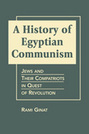 |
Qatar: Politics and the Challenges of DevelopmentMatthew Gray A small isthmus in the central Gulf, with barely 300,000 citizens and a total population of 1.7 million, Qatar has risen rapidly from obscurity to become the world's wealthiest country per capita. Matthew Gray traces this spectacular rise, exploring the development of Qatar's economy, the patterns of its politics, its role on the world stage, and its prospects for the future. More > | 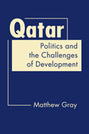 |
Why Muslims Rebel: Repression and Resistance in the Islamic WorldMohammed M. Hafez, with a foreword by Fred Halliday Now available in paperback! Rejecting theories of economic deprivation and psychological alienation, Mohammed Hafez offers a provocative analysis of the factors that contribute to protracted violence in the Muslim world today. Hafez combines a sophisticated theoretical approach and detailed case studies to show that the primary source of Islamist insurgencies lies in the repressive political More > | 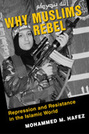 |
Identity in Algerian Politics: The Legacy of Colonial RuleJ.N.C. Hill J.N.C. Hill explores the multiple causes of two decades of profound political change, social and economic upheaval, and bitter conflict in postindependence Algeria. Hill focuses on the relationship between identity and sociopolitical stability as he examines the trajectory of Algerian nation building. How did French colonization and the war of liberation transform Algerian identities? How More > | 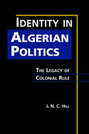 |
The Foreign Policies of Middle East States, 2nd editionRaymond Hinnebusch and Anoushiravan Ehteshami, editors This new edition of The Foreign Policies of Middle East States reflects the momentous events and shifting dynamics that have occurred in the region in the nearly fifteen years since the first edition was published. Working within a common analytical framework, the authors offer a theoretically grounded, systematic examination of the foreign policies of eleven states. More > |  |
Women, Islam, and Resistance in the Arab WorldMaria Holt and Haifaa Jawad How are women in the Arab world negotiating the male-dominated character of Islamist movements? Is their participation in the Islamic political project—including violent resistance against foreign invasion and occupation—the result of coercion, or of choice? Questioning assumptions about female powerlessness in Muslim societies, Maria Holt and Haifaa Jawad explore the resistance More > |  |
The Palestinian People: Seeking Sovereignty and StateMustafa Kabha Mustafa Kabha plumbs the complex story of the Palestinian people, from the revolts of 1936-1939 to the present, focusing on their efforts to establish a viable independent state—and the internal factors that have thwarted them. With unparalleled access to primary sources, as well as secondary material in Arabic, Hebrew, and English, Kabha provides an abundance of new information in a More > |  |
Egyptian Politics: The Dynamics of Authoritarian RuleMaye Kassem Though the regimes of Egyptian presidents Nasser, Sadat, and Mubarak have been decidedly different, the nature of personal authoritarian rule in Egypt has remained virtually unchanged across more than five decades. Maye Kassem traces the shaping of contemporary Egyptian politics, considering why authoritarian rule has been so resilient and assessing the mechanisms that have allowed for its More > |  |
Power and Succession in Arab Monarchies: A Reference GuideJoseph A. Kéchichian Power and Succession in Arab Monarchies provides an essential compendium of information regarding the politically charged issue of succession in Bahrain, Jordan, Kuwait, Morocco, Oman, Qatar, Saudi Arabia, and the United Arab Emirates. Based on scarce source material and a wide range of inside information, this exhaustive reference: traces the rise of each ruling family outlines key More > |  |
Identity and Nation in IraqSherko Kirmanj Sherko Kirmanj offers a balanced, critical analysis of the evolution of Iraqi national identity and the process of national integration, tracing a history of antagonisms and violence that began with the creation of the state in 1921. Challenging approaches that variously blame the legacy of the Baathist regime or the US invasion for the sectarian violence that plagues Iraq, Kirmanj delves into More > |  |
Political Liberalization and Democratization in the Arab World, Vol. 2: Comparative ExperiencesBahgat Korany, Rex Brynen, and Paul Noble Drawing on the theoretical insights offered in its companion volume, this book examines the processes of and prospects for political reform in 10 Arab countries—Algeria, Egypt, Jordan, Kuwait, Lebanon, Morocco, Palestine, Sudan, Syria, and Yemen—selected to demonstrate a broad range of contexts, trajectories, and political potentials. The authors have gone beyond the traditional More > | |
Middle East Monarchies: The Challenge of ModernityJoseph Kostiner, editor Though monarchies have been deemed obsolete by many observers, recent history testifies to their profound resilience. This volume offers an in-depth discussion of the fundamentals and performance of monarchies in the Middle East. The authors focus on four themes: the roots and characteristics of Middle East monarchies, the causes of the collapse of some and the longevity of others, the More > |  |
Political Islam and Democracy in the Muslim WorldPaul Kubicek Belying assertions of the incompatibility of Islam and democracy, many Muslim-majority countries are now or have been democratic. Paul Kubicek draws on the experiences of those countries to explore the relationship between political manifestations of Islam and democratic politics. Kubicek's comparative analysis allows him to highlight the common features that create conditions amenable to More > |  |
Political Participation in the Middle EastEllen Lust-Okar and Saloua Zerhouni, editors Political Participation in the Middle East provides essential context for understanding current political activism across the MENA region. Through an in-depth exploration of seven countries, the authors address how formal and informal political institutions create opportunities for participation in venues as varied as trade unions, civic associations, political parties, and elections. And, More > |  |
Isolating Qatar: The Gulf Rift, 2017–2021Edward A. Lynch In June 2017, Bahrain, Egypt, Saudi Arabia, and the UAE announced a comprehensive boycott of Qatar. Diplomatic ties were severed, trade was banned, and airspace was closed. Qatari nationals were expelled from all four countries. It seemed that disaster loomed for this small Gulf nation. But not so. Instead, in an unexpected turn of events, the Qatari government deftly used its enormous wealth and More > |  |
Politics and Culture in Contemporary Iran: Challenging the Status QuoAbbas Milani and Larry Diamond, editors Despite the relative calm apparent in Iran today, there is unmistakable evidence of political, social, and cultural ferment stirring beneath the surface. The authors of Politics and Culture in Contemporary Iran—a group of scholars, activists, and artists—explore that unrest and its challenge to the legitimacy and stability of the present authoritarian regime. Ranging from political More > |  |
Modernizing Women: Gender and Social Change in the Middle East, 3rd editionValentine M. Moghadam Valentine Moghadam's seminal study of the gendered nature of political and social processes in the Middle East and North Africa has been fully updated to reflect more than a decade of major changes. This new edition reflects an emphasis on the impacts of both globalization and democratization. It also includes entirely new chapters on the gender dynamics of conflicts in the region, on More > |  |
Islamism: A New TotalitarianismMehdi Mozaffari What exactly is Islamism? And what explains its violent expansion in recent decades? Why are Islamists so determined to change the world order? Are there similarities between Islamism and classical totalitarian regimes and ideologies? Will it fail, as those regimes did in Nazi Germany and the Soviet Union—or can it adapt effectively to changing realities? What are the fundamental strengths More > |  |
Minorities and Minority Rights in Turkey: From the Ottoman Empire to the Present StateBaskın Oran, translated by John William Day The collapse of the multiethnic, multireligious, and multilingual Ottoman Empire after World War I led to the establishment of several nation-states, with enormous repercussions for the empire's minority populations. Baskın Oran focuses on religious and ethnic minorities in the Republic of Turkey—home for centuries to Alevites, Armenians, Greeks, Jews, Kurds, Syriacs, and more—to More > |  |
Israel’s National Identity: The Changing Ethos of ConflictNeta Oren In a country whose citizens have experienced prolonged exposure to intractable conflict, are there unique features to be found in Israeli society’s core beliefs? And how—and to what effect—have those beliefs changed across the decades? To answer these questions, Neta Oren deeply explores Israel's political culture. Oren focuses especially on two circular processes: the More > |  |
Mohammed bin Salman: The Icarus of Saudi Arabia?David B. Ottaway Mohammed bin Salman. A monarch-to-be without scruples? Or a visionary seeking a path to global power? A social reformer determined to bring his country into the twenty-first century? Or just another brutal dictator? A leader on the road to greatness, or one destined to follow in the footsteps of Icarus? Veteran Washington Post foreign correspondent David Ottaway draws on more than a half-century More > | 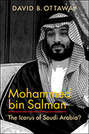 |
The Arab World Upended: Revolution and Its Aftermath in Tunisia and EgyptDavid B. Ottaway After the autocratic regimes in the seemingly unassailable police states of Tunisia and Egypt suddenly collapsed in 2011, the Islamic parties that took over quickly succumbed in turn to further massive uprisings, this time by disaffected secularists and, in the case of Egypt, with the support of the army. What explains this? And why do the current regimes in both countries remain so More > |  |
Arab Elites: Negotiating the Politics of ChangeVolker Perthes, editor The recent deaths of four long-term heads of state in the Arab world heralded important changes, as political power passed from one generation to the next. Shedding light on these changes, Arab Elites explores the attitudes and political agendas of the new leadership emerging throughout the region. A strong analytical framework informs the authors' discussion of elites in Algeria, More > |  |
Authoritarianism in the Middle East: Regimes and ResistanceMarsha Pripstein Posusney and Michele Penner Angrist, editors Why do authoritarian regimes prevail in the Middle East, while successful democratic transitions are occurring elsewhere in the developing world? Authoritarianism in the Middle East addresses this question, focusing on the role of political institutions and the strategic choices made by both rulers and opposition challengers. The authors eschew cultural explanations, highlighting instead the More > |  |
Democracy and Authoritarianism in the Arab WorldNicola Pratt What explains the enduring rule of authoritarian regimes in the Arab world? Nicola Pratt offers an innovative approach to this recurring question, shedding light on the failure of democratization by examining both the broad dynamics of authoritarianism in the region and the particular role of civil society. Pratt appraises the part that civil society actors played in the normalization of More > |  |
Fragile Nation, Shattered Land: The Modern History of SyriaJames A. Reilly How did the lands that are today Syria survive the vicissitudes of centuries of Ottoman, Egyptian, and French rule, only to stand in ruins today, shattered by a brutal civil war? To provide answers, James Reilly traces five centuries of Syrian history, from the Ottoman period to the present. Reilly brings to life the myriad historical, cultural, social, economic, and political factors that have More > |  |
Defining Democracy: Democratic Commitment in the Arab WorldHannah M. Ridge The Middle East and North Africa comprise by all measures one of the least democratic regions in the world. At the same time, decades of research show robust support for democracy among MENA residents. A paradox ... or is it? Hannah Ridge explores the "democracy paradox" by parsing the meanings that citizens assign to the Arab word dimuqratiyya. Drawing on Arab Barometer data from More > |  |
Qaddafi's Libya in World PoliticsYehudit Ronen Libya's enigmatic Muammar Qaddafi demonstrated a perhaps unprecedented capacity for reinvention and survival, particularly in the realm of foreign policy. Yehudit Ronen traces Libya's sometimes tortuous trajectory in international affairs across the four decades of Qaddafi's leadership. Ronen addresses a range of critical issues: oil politics, foreign military adventurism, WMDs, More > |  |
Encyclopedia of the Israeli-Palestinian ConflictCheryl A. Rubenberg, editor ForeWord Magazine's Reference Book of the Year! The three-volume Encyclopedia of the Israeli-Palestinian Conflict is the first authoritative reference source to provide comprehensive, impartial coverage of one of the most torturous and prolonged conflicts of our time. Written by an international team of more than 100 experts, and subject to an exhaustive, bias-hunting editorial process, More > |  |
Palestinian Women: Patriarchy and Resistance in the West BankCheryl A. Rubenberg Cheryl Rubenberg's richly textured analysis provides a case study of the multifaceted and deleterious effects of patriarchy among Palestinians living in the rural villages and refugee camps of the West Bank: its negative consequences for men as well as women, for democratization, and for progress toward the creation of a more just, equitable, and prosperous society. Privileging the voices of More > | |
From Herzl to Rabin: The Changing Image of ZionismAmnon Rubinstein Amnon Rubinstein traces the history of the Israeli state, and of Zionism, moving deftly between the roles of objective historian and persuasive politician. More > | 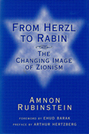 |
Jordan in Transition: From Hussein to AbdullahCurtis R. Ryan Jordan in Transition offers a cogent and compelling analysis of the country's domestic and international politics. Ryan argues that there have been four dramatic transitions in Jordan's recent past: ambitious economic restructuring, efforts toward political liberalization, realignments in foreign relations (culminating in the 1994 peace agreement with Israel), and the succession of King More > | 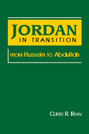 |
Gender in the Middle East and North Africa: Contemporary Issues and ChallengesJ. Michael Ryan and Helen Rizzo, editors Choice Outstanding Academic Book! The role of gender in the Middle East and North Africa is widely discussed—but often little understood. Seeking to close that gap, the authors of this comprehensive study explore a wide range of issues related to gender in the region as they have been unfolding since the Arab Spring. More > | 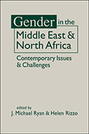 |
Rebuilding Arab Defense: US Security Cooperation in the Middle EastBilal Y. Saab After decades of US military assistance in the Middle East—providing expensive weapons systems and conducting military exercises—why are the military capabilities of US allies in the region still lacking? Why does it matter? And what can be done to remedy the status quo? Bilal Saab addresses these vexing questions through a set of in-depth case studies. Identifying the pitfalls of More > | 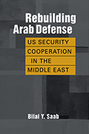 |
Politics, Parties, and Elections in TurkeySabri Sayari and Yilmaz Esmer The Turkish party system has undergone significant changes since the 1940s, moving from a two-party system to one encompassing nineteen parties— and resulting in a highly fragmented parliament. The contributors to this volume assess the intertwined effects of party fragmentation and voter volatility in Turkey. Presenting a wealth of data, they illuminate the trajectory of democratic More > |  |
NATO and the Middle East: In Search of a StrategyRolf Schwarz Over the course of more than seven decades, NATO has sought, but not settled on, an effective strategy for interacting with its neighbors in the Middle East and North Africa. Rolf Schwarz traces the evolution of NATO's engagement with its neighboring region—including the launching of the Mediterranean Dialogue and the Istanbul Cooperation Initiative—and assesses its potential for More > |  |
Understanding the Contemporary Middle East, 5th editionJillian Schwedler, editor The previous edition of Understanding the Contemporary Middle East was published soon after the Arab uprisings, and the authors—writing across disciplines—captured those moments of possibility. Now, more than six years later, the Middle East is substantially changed, with three protracted civil wars, several retrenched authoritarian regimes, possibly one emerging democracy, and social More > |  |
Afghanistan’s Troubled Transition: Politics, Peacekeeping, and the 2004 Presidential ElectionScott Seward Smith Scott Seward Smith focuses on Afghanistan's 2004 presidential election—the first popular election ever held there—as he explores the painstaking attempt by the United Nations to develop democratic institutions in the country. Smith thoroughly describes the personalities, policies, bureaucracies, and external factors that shaped the faltering transition process from 2001 through More > |  |
Damascus Diary: An Inside Account of Hafez al-Assad's Peace Diplomacy, 1990-2000Bouthaina Shaaban, with a foreword by Fred Lawson Bouthaina Shaaban worked closely with Syria's president Hafez al-Assad from 1990 until the time of his death, serving as both official interpreter and adviser. Her new book, part memoir and part historical account, takes the reader behind the closed doors of the Syrian Presidential Palace to provide uniquely Syrian perceptions of the failed Arab-Israel peace talks. Sharing firsthand stories More > | 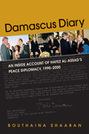 |
Qatar and the United Arab Emirates: Diverging Paths to Regional and Global PowerEmma Soubrier In the years following the turmoil of the Arab Spring, Qatar and the United Arab Emirates jockeyed for power, becoming significant forces—and rivals—in regional politics. Emma Soubrier unpacks the nuts and bolts of these two small states' rise to prominence, exploring how their diverging foreign and security policies have enabled both of them to become power players in the Middle More > | 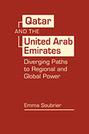 |
Islam in Contemporary Egypt: Society vs. the StateDenis J. Sullivan and Sana Abed-Kotob This unusually accessible book provides a comprehensive picture of Islam in contemporary Egyptian politics and society, emphasizing its diversity and heterogeneity. Tracing the development of Islam as a social, political, and economic force in Egypt, Sullivan and Abed-Kotob analyze the role it plays in governance and opposition to political authority, in social relations, and in the often-ignored More > | |
Jordan, Palestine, and the Politics of Collective Identity: A HistoryAsher Susser In a sweeping narrative, Asher Susser traces the evolution of Jordanian politics through the prism of the kingdom's policies toward Palestine and the Palestinians. Susser shows how the triangular relationship involving Jordan, the Palestinians, and Israel—from the creation of the Emirate of Transjordan in 1921 to the present—came to influence the Jordanians' sense of More > | 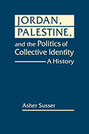 |
Political Change in the Arab Gulf States: Stuck in TransitionMary Ann Tétreault, Gwenn Okruhlik, and Andrzej Kapiszewski, editors Although reform movements have been prominent in varying degrees in most Middle Eastern countries for some time, the recent cascade of events has generated new pressures for democratization throughout the Arab World. Political Change in the Arab Gulf States explores the politics influencing the volatile situation in the region, as well as specific measures devised by regimes in power to adjust to More > | 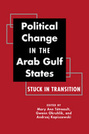 |
Egypt’s Tahrir RevolutionDan Tschirgi, Walid Kazziha, and Sean F. McMahon, editors The 18-day revolt that ended Hosni Mubarak's 30 years of rule marked a historic turning point in the political fortunes not only of Egypt, but of the entire Middle East. While the impact of that seminal event will continue to unfold for years, this volume, written by members of the Department of Political Science at the American University in Cairo, presents an authoritative exploration of the More > |  |
Autocracy and Resistance in the Internet AgeRachel Vanderhill How do autocratic governments exploit communication technology in their efforts to maintain power? Can prodemocracy activists successfully use that same technology to support the overthrow of autocratic rulers? Rachel Vanderhill addresses these two questions, exploring in detail how social media are both aiding and undermining autocratic regimes in the Middle East, North Africa, and the former More > |  |
National Security and Democracy in IsraelAvner Yaniv, editor The Arab-Israeli conflict in general and the Palestinian intifada in particular have given rise to a wave of critical reappraisals of the Israeli experience—reappraisals that increasingly have come from those who can only be described as mainstream Israelis. Situated within this emerging tradition of scholarly criticism, this book addresses a variety of problems that arise from the fact that More > | |
The Politics of Human Rights in Egypt and JordanBosmat Yefet Why did human rights claims have such a limited impact on the authoritarian status quo in the Middle East prior to the Arab Spring—and why are they so often thwarted now? What factors have shaped human rights debates and outcomes in the region? Addressing these questions, Bosmat Yefet offers a comparative analysis, both empirically grounded and theoretically sophisticated, of the forces More > |  |