



International Relations (all books)
This wide-ranging critique of current endeavors to construct a world order based on neoliberal ideology comes not from a standpoint opposed to liberalism, but from within liberalism More >
Governing the Internet explores the many complex issues and challenges that confront governments, technocrats, business people, and others as they try to create and implement rules for a More >
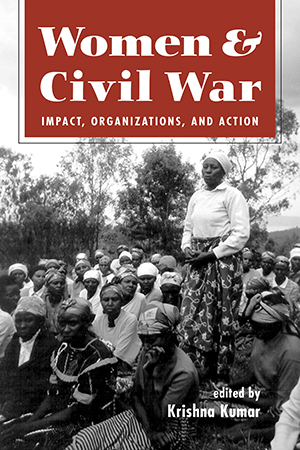
Women typically do not remain passive spectators during a war, nor are they always its innocent victims; instead, they frequently take on new roles and responsibilities, participating in More >
When should the United States cooperate with others in confronting global problems? Why is the U.S. often ambivalent about multilateral cooperation? What are the costs of acting alone? These More >
Despite the deployment of NATO forces in Kosovo and the UN's direct involvement in governing the province, such terrors as murder, disappearances, bombings, and arson have become routine More >
In Capitalism and Justice, John Isbister takes a practical approach to some of the most important questions of economic and social justice in the context of the global economy: How big a More >
In the face of potent domestic and global forces, the U.S., Canada, and Mexico—the NA-3—have devised an enterprise that promises to draw them closer together in the twenty-first More >
In the past, posits Christopher Coker, wars were all-encompassing; they were a test not only of individual bravery, but of an entire community's will to survive. In the West today, in More >
Although it has been more than a decade since the Cold War global structure collapsed, neither scholars nor policymakers have clearly identified its replacement. What is the new world order, More >
The UN intervention in East Timor amply illustrates the type of complex operation that the United Nations increasingly is being asked to undertake. Michael Smith analyzes the successes and More >
Despite intensive international efforts in the area of conflict prevention, there is still little agreement about how civil wars might best be averted. And, as the news regularly reminds us, More >
More than a decade after the end of the Cold War, the need to control the spread of arms remains clear, while the usefulness of traditional paradigms is increasingly called into question. More >
Considering the future of U.S.-Korea relations, Edward Olsen first provides a rich assessment of the political, economic, and strategic factors that have shaped—and flawed—U.S. More >
Errol Henderson critically examines what has been called the closest thing to an empirical law in world politics, the concept of the democratic peace. Henderson tests two versions More >
In recent years, debates within academic and policymaking circles have gradually shifted—from a Cold War focus on whether democracy constitutes the best form of governance, to the More >



