



BOOKS
Since the end of its genocidal civil war in 1994, Rwanda has embarked on an ambitious, and often controversial, process of reconstruction. Jean-Paul Kimonyo comprehensively analyzes that More >

Why did Rwanda's rural Hutus participate so massively, and so personally, in the country's 1994 genocide of its Tutsi population? Given all that has been written already about this More >
Drought, lack of access, poor quality … water supplies are in jeopardy across Africa and the Middle East. These same areas are rife with conflicts involving Islamic extremist groups. More >
Ann Kingsolver presents stories people have told about NAFTA—young people and old, urban and rural, with differing political perspectives, occupations, and other markers of More >
When and why is war justified? How, morally speaking, should wars be fought? The Morality of War confronts these challenging questions, surveying the fundamental principles and themes of the More >

National Jewish Book Awards Finalist! Humorous and endearing, while dealing with complex issues, the stories in Goodbye, Evil Eye reflect the tensions between Sephardic Jews and More >
Sherko Kirmanj offers a balanced, critical analysis of the evolution of Iraqi national identity and the process of national integration, tracing a history of antagonisms and violence that More >
Wars of secession, ethnic wars, rebellions, and mutinies have been part of the political landscape of the Democratic Republic of Congo since the country became independent in 1960. More >
Although a regular occurrence for millions of women, menstruation is typically represented in US culture as an illness or a shameful episode—to the benefit of an entire industry. More >
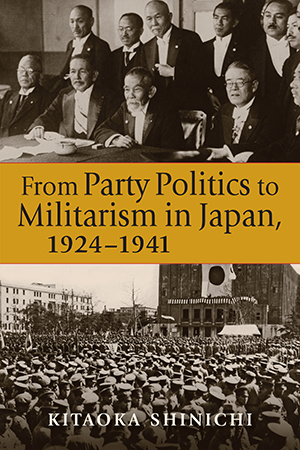
The years in Japan between June 1924, when a coalition cabinet of three political parties was established, and December 1941, when the country declared war on the United States and Britain, More >



