



BOOKS
Taiwan: The Development of an Asian TigerHans Stockton and Yao-Yuan Yeh, eds. How did Taiwan transform itself from a "least developed country" into an Asian Tiger? How did it become a successful, multiparty democracy after years of authoritarian rule? Why do its relations with China and the US remain critical? The authors address these questions as they assess Taiwan's trajectory since 1949 in the political, economic, and social spheres. They also consider More > |  |
Taiwan's Democracy Challenged: The Chen Shui-bian YearsYun-han Chu, Larry Diamond, and Kharis Templeman, editors When Chen Shui-bian, Taiwan's first non-Kuomintang president, left office in 2008, his tenure was widely considered a disappointment. More recent events, however, suggest the need for a reassessment of this crucial period in Taiwan's political development. Taiwan's Democracy Challenged provides that assessment, considering key facets of both the progress toward and the obstacles to More > |  |
Taiwan's Political Economy: Meeting Challenges, Pursuing ProgressCal Clark and Alexander C. Tan Taiwan's economic and political transformation was once considered a model for developing nations, but in recent decades, the momentum has stalled. Why? Cal Clark and Alexander Tan explain the country's paradoxical political economy, tracing its achievements and exploring its challenges. The authors appraise Taiwan's hard-won accomplishments—a legitimate democracy and a More > |  |
Taiwan's Security in the Changing International SystemDennis Van Vranken Hickey One of the most critical tasks facing Taiwan's government in the post-Cold War era is the need to reassess its security environment. In this context, Hickey discusses the island's security concerns, the structure and composition of its armed forces, and its defensive strategy. He also explores the opportunities and challenges for Taipei generated by recent transformations in the More > |  |
Taiwan's Security Policy: External Threats and Domestic PoliticsMichael S. Chase Confounding expectations, Taiwan reduced its military spending for many years even as its sole adversary, the People's Republic of China, modernized its military and significantly increased its defense budget. Michael Chase examines the key factors that have shaped Taiwan's security policy over a span of three decades. Chase explores both the role of US security assurances in formulating More > |  |
Tank Tactics: From Normandy to LorraineRoman Johann Jarymowycz Winner of the 2001 AHF Distinguished Writing Award, Twentieth Century U.S. Army History An operational critique of the art of war as practiced by U.S. and Canadian tank commanders in France in 1944, Tank Tactics also traces the evolution of North American armored doctrine. Jarymowycz draws on after-action reports, extensive battlefield reconnaissance (involving both Allied and German More > | 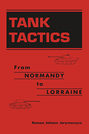 |
Tapping Philanthropy for Development: Lessons Learned from a Public-Private Partnership in Rural UgandaLorna Michael Butler and Della E. McMillan, editors In telling the story of an innovative program based at Iowa State University (ISU), Lorna Michael Butler, Della McMillan, and their colleagues offer practical, step-by-step advice critical for any organization seeking to fund and manage multifaceted, public-private partnerships for development. The story begins when the College of Agriculture and Life Sciences at ISU received large gifts from More > | 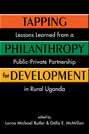 |
Tawfiq al-Hakim: A Reader's GuideWilliam Maynard Hutchins Tawfiq al-Hakim (1898-1987) dedicated much of his long life to a fruitful attempt to advance the fortunes of twentieth century Arabic literature by writing it. This guide to his work provides paths for readers through his multiple literary worlds. Chapters on his personal history, his novels, plays, short stories, and essays, his Islamic feminism, and his theology are enhanced by a discussion of More > | 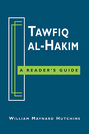 |
Teacher Professional Development in Sub-Saharan Africa: Advancing Quality and Equitable EducationJoseph Pesambili and Marcina Singh, editors Spanning Anglophone, Francophone, and Lusophone contexts—including conflict-affected and refugee settings—Joseph Pesambili and Marcina Singh offer a critical, evidence-based examination of Continuing Professional Development (CPD) programs across Africa. What they confront is a stubborn reality: the gap between ambitious reform expectations and the institutional conditions in which More > | 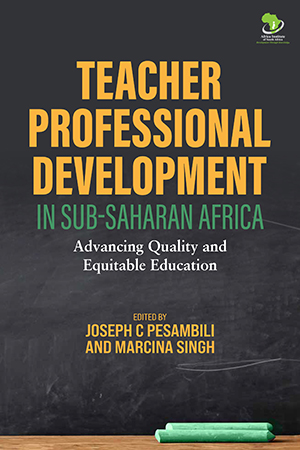 |
Teaching Islam: Textbooks and Religion in the Middle EastEleanor Abdella Doumato and Gregory Starrett, editors Much has been made of the role that Saudi Arabia's education system played in fostering the hatred that fueled the September 11 terror attacks. But do Saudi textbooks deserve to be faulted for fostering violence? And have Wahhabi ideas infiltrated the Islamic textbooks used in public schools throughout the Middle East? Confronting these questions, Teaching Islam explores the political and More > | 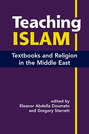 |



