



BOOKS
The Second Nuclear AgeColin S. Gray Colin Gray returns nuclear weapons to the center stage of international politics. Taking issue with the complacent belief that a happy mixture of deterrence, arms control, and luck will enable humanity to cope adequately with weapons of mass destruction (WMD), Gray argues that the risk posed by WMD is ever more serious. Policy that ignores the present nuclear age, he cautions, is policy that More > |  |
The Self-Determination of Peoples: Community, Nation, and State in an Interdependent WorldWolfgang Danspeckgruber, editor With contentious issues of sovereignty and self-determination a focus of current world affairs, this comprehensive analysis is especially timely. The authors explore the conceptual, political, legal, cultural, economic, and strategic aspects of self-determination—encompassing both theory and practice—in the context of the evolving international system. Wide-ranging case studies enrich More > |  |
The Self-Restraining State: Power and Accountability in New DemocraciesAndreas Schedler, Larry Diamond, and Marc F. Plattner, editors New democracies all over the world are finding themselves haunted by the old demons of clientelism, corruption, arbitrariness, and the abuse of power—leading to a growing awareness that, in addition to elections, democracy requires checks and balances. Democratic governments must be accountable to the electorate; but they must also be subject to restraint and oversight by other public More > |  |
The Seventh Door and Other StoriesIntizar Husain, editor; with an introduction by Muhammad Umar Memon These powerful stories were written between 1947, when Pakistan was created, and 1971, when it was fragmented by the creation of Bangladesh as an independent nation. Steeped in an unmistakable Shi’ite ambiance, they also draw freely on memoirs and memories, dreams and visions, Middle Eastern oral traditions, and Hindu and Buddhist mythology. More > |  |
The Ship [a novel]Jabra I. Jabra, translated and introduced by Adnan Haydar and Roger Allen Jabra's highly acclaimed novel is a masterful exploration of the post-1948 Arab world, with its frustrations, yearnings for homeland, and struggle for survival. As his characters interact on a ship sailing from Beirut to Europe, Jabra exposes them to the elements of spiritual and physical displacement. Some survive; others do not. More > | ![The Ship [a novel]](/uploads/t66fda7a533842.jpg) |
The Siege at HueGeorge W. Smith Charged with monitoring the huge civilian press corps that descended on Hue during the Vietnam War’s Tet offensive, US Army Captain George W. Smith witnessed firsthand a vicious twenty-five day battle. Smith recounts in harrowing detail the separate, poorly coordinated wars that were fought in the retaking of the Hue. Notably, he documents the little-known contributions of the South More > | 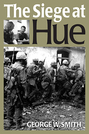 |
The Sinners [a novel]Yusuf Idris, translated by Kristin Peterson-Ishaq A woman abandons her newborn baby in a ditch. Soon discovered, the corpse arouses in the local peasants an intense desire to bring the killer to justice—and gives them the excuse to pry into the lives of the entire community. The primary suspects are a group of migrant workers, and the question of their guilt or innocence soon reveals other kinds of truths. The Sinners is an evocative More > | ![The Sinners [a novel]](/uploads/t66fda5beb3879.jpg) |
The Sixth South African National HIV, Behavioural and Health Survey (SABSSM VI): Twenty Years of Strategic HIV and Public Health Data Khangelani Zuma et al., editors Twenty years after Nelson Mandela commissioned the first HIV household survey in South Africa, this latest data collection undertaken by the Human Sciences Research Council and its partners surveys 93,000 households and gathers 65,000 blood specimens to gain strategic insight into the progression of the HIV epidemic. Notably, the survey: • Shows HIV prevalence in adults and More > | 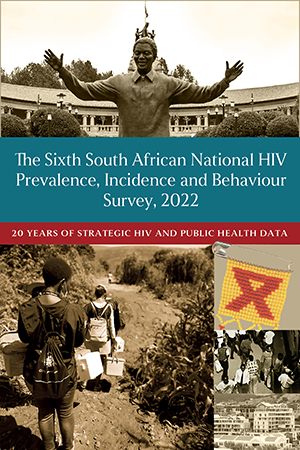 |
The Social Origins of the Modern Middle EastHaim Gerber Elaborating on Barrington Moore's theory of the agrarian origins of civilization, Gerber traces the effects of the Ottoman socioagrarian structure on political formation and revolution in the modern Middle East. More > |  |
The Sources of Military Change: Culture, Politics, TechnologyTheo Farrell and Terry Terriff, editors In varying circumstances, military organizations around the world are undergoing major restructuring. This book explores why, and how, militaries change. The authors focus on a complex of three influencing factors—cultural norms, politics, and new technology—offering a historical perspective of more than a century. Their analyses range from developing states to Russia, Britain, the More > |  |



