



International Relations (all books)
Errol Henderson critically examines what has been called the closest thing to an empirical law in world politics, the concept of the democratic peace. Henderson tests two versions More >
In recent years, debates within academic and policymaking circles have gradually shifted—from a Cold War focus on whether democracy constitutes the best form of governance, to the More >
Analyzing some thirty policy decisions across three countries and five decades, Sieglinde Gstöhl considers why some countries continue to be "reluctant More >
Following on the publication of The Sanctions Decade—lauded as the definitive history and accounting of United Nations sanctions in the 1990s—David Cortright and George Lopez More >
Simon Murden investigates how Muslim societies in the Middle East are being affected by globalized politics and economics, and how they are adapting to it. Murden describes how a More >
Although the 1995 Cenepa war between Ecuador and Peru was the first military conflict in South America in more than five decades, the Ecuador-Peru relationship might be characterized as one More >
What does the increasing use of private security forces mean for governments? For individuals? Armies Without States offers a comprehensive analysis of the varieties, causes, and More >
Introducing students to global environmental politics from a critical perspective, Lee-Anne Broadhead reveals the yawning gap between the rhetoric of international agreements and the reality More >
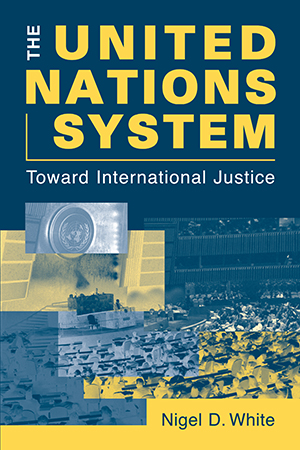
To what extent does the United Nations system work? This comprehensive survey of the world's most important family of international organizations examines the UN's structure and More >
In the search for institutional models that can deliver more and better development outcomes, partnership is arguably among the most popular solutions proposed. But the evidence of More >
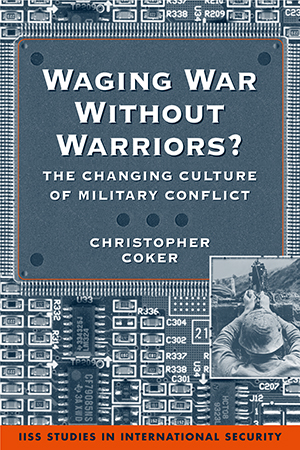
In the past, posits Christopher Coker, wars were all-encompassing; they were a test not only of individual bravery, but of an entire community's will to survive. In the West today, in More >
Considering the future of U.S.-Korea relations, Edward Olsen first provides a rich assessment of the political, economic, and strategic factors that have shaped—and flawed—U.S. More >
More than a decade after the end of the Cold War, the need to control the spread of arms remains clear, while the usefulness of traditional paradigms is increasingly called into question. More >
Despite intensive international efforts in the area of conflict prevention, there is still little agreement about how civil wars might best be averted. And, as the news regularly reminds us, More >
The UN intervention in East Timor amply illustrates the type of complex operation that the United Nations increasingly is being asked to undertake. Michael Smith analyzes the successes and More >



