



Middle East Politics

If petroleum buys political legitimacy in the Arab Gulf states, how can we explain the rise of dissent and calls for political reform despite sustained oil revenues? The answer, according to More >
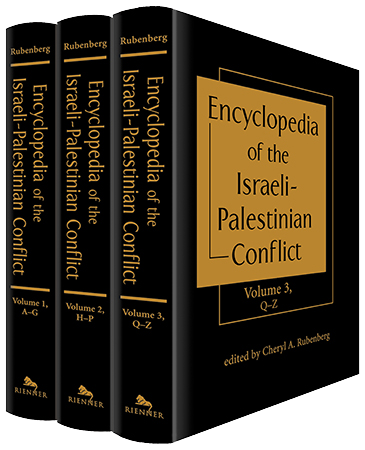
ForeWord Magazine's Reference Book of the Year! The three-volume Encyclopedia of the Israeli-Palestinian Conflict is the first authoritative reference source to provide comprehensive, More >
Although reform movements have been prominent in varying degrees in most Middle Eastern countries for some time, the recent cascade of events has generated new pressures for democratization More >
Scott Seward Smith focuses on Afghanistan's 2004 presidential election—the first popular election ever held there—as he explores the painstaking attempt by the United Nations More >
Rami Ginat offers an entirely new reading of the evolution of communism in Egypt, including the central role of Egyptian Jews in both its development and its impact on Egypt and the wider More >
Recent years have seen dramatic changes in the nature, direction, and impact of Turkey's foreign relations in its neighborhood—a region that encompasses Europe, the Middle East, More >
Ofra Bengio explores the dynamics of relations between the Kurds of Iraq and the Iraqi state from the inception of the Baath regime to the present. Bengio draws on a wealth of rich source More >
For years the authoritarian regimes of the Arab world displayed remarkable persistence. Then, beginning in December 2010, much of the region underwent rapid and remarkable political More >
What are the dynamics of civic activism in authoritarian regimes? How do new social actors—many of them informal, "below the radar" groups—interact with these regimes? More >
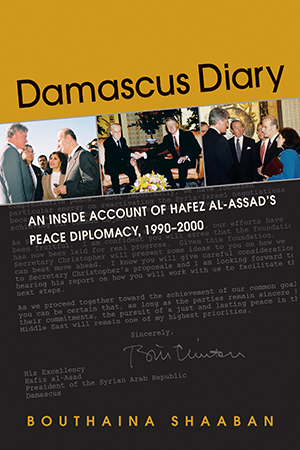
Bouthaina Shaaban worked closely with Syria's president Hafez al-Assad from 1990 until the time of his death, serving as both official interpreter and adviser. Her new book, part memoir More >
The 18-day revolt that ended Hosni Mubarak's 30 years of rule marked a historic turning point in the political fortunes not only of Egypt, but of the entire Middle East. While the impact More >
Sherko Kirmanj offers a balanced, critical analysis of the evolution of Iraqi national identity and the process of national integration, tracing a history of antagonisms and violence that More >
A small isthmus in the central Gulf, with barely 300,000 citizens and a total population of 1.7 million, Qatar has risen rapidly from obscurity to become the world's wealthiest country More >
Despite radical changes in Turkish politics since the transition to a multiparty system in the mid-1940s, the center-right parties have consistently won an electoral majority. Why? How have More >
Valentine Moghadam's seminal study of the gendered nature of political and social processes in the Middle East and North Africa has been fully updated to reflect more than a decade of More >



