



BOOKS

From tamper-proof seals to cell phones that prevent theft-of-service, it has been proven that modifying products can reduce or even eliminate specific categories of crime. The contributors More >
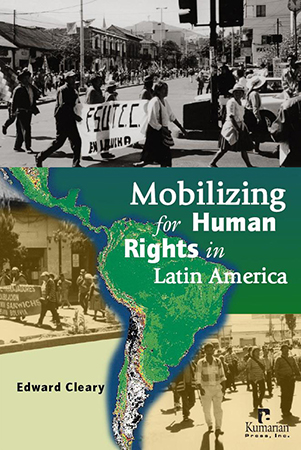
In this follow-up to his widely read The Struggle for Human Rights in Latin America, Edward Cleary examines some of the robust human rights movements of the past two decades. More >
In 1990, Nicaraguans voted out the revolutionary Sandinista regime and replaced it with the conservative government of President Violeta Chamorro. Chamorro's term of office was marked by More >
Since the 1970s, Nicaragua has experienced four major regime changes—shifts in its fundamental logic, structure, and operational code of governance. What accounts for such instability? More >
Legislatures are indispensable parts of constitutional liberal democracies, controlling and criticizing the executive while voicing a wide range of opinions on public issues. This book More >
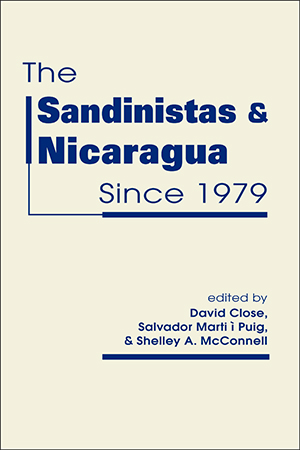
How has the Sandinista National Liberation Front (FSLN) affected Nicaragua and its politics since the Sandinista revolution of 1979? Addressing this question, the authors offer a More >

The still contentious issues of the Mau Mau revolt are thrown into stark relief by the Mau Mau Memoirs, personal accounts by Kenyans of the events of that violent period. Marshall Clough More >
Despite the homogenizing effect of globalization, identity politics have gained significance—numerous groups have achieved political goals and gained recognition based on, for example, More >
In this politically incorrect essay, Samy Cohen, one of France's leading specialists in international relations, attacks an established sacred cow: the theory of state More >
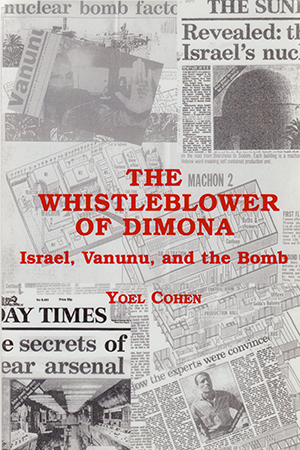
In 1986, Mordechai Vanunu, a technician at Israel's highly secret nuclear arms research center at Dimona, disclosed highly classified details about Israel's nuclear arms program to More >



